With its spectacular scenery, Letchworth State Park is one of the most beloved parks in our system. But a crucial part of its story is the power of thinking differently.
Letchworth State Park.
William Pryor Letchworth, the park’s namesake, was deeply interested in epilepsy, traveling the country and the world in the late 1800s to study how it was treated. It’s not unreasonable to imagine that Letchworth would be proud to know that the park bearing his name is now home to a first-of-its-kind nature trail designed to meet the needs of people with an often misunderstood and stigmatized condition: autism.
When it comes to planning a vacation or getaway, New York State Parks has overnight options for all kinds of adventures – and budgets!
While some enjoy sleeping in tents away from it all in remote, natural settings under the stars, others crave a few more amenities. Whether you prefer booking rustic cabins and bringing your RV, staying in fully equipped cottages, or resting your head at a historic inn or resort with the comforts of home, State Parks has something for everyone.
Our Parks system includes 8,148 campsites, 967 cabins and cottages, 18 yurts, three inns, and – yes – a lighthouse. There are countless adventures for every type of stay. Get a map handy and explore highlights from some of our most interesting properties to inspire your next stay.
La Isla Bonita
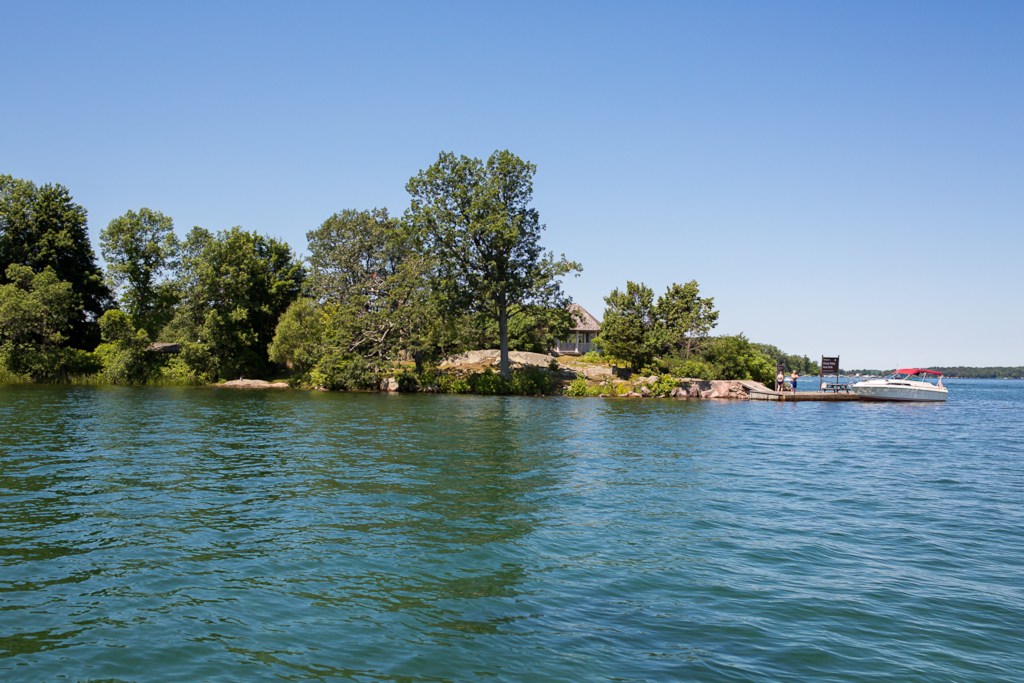
If you have a boat or have access to renting one, answer the siren song of the water and consider the benefits of staying on one of three island parks in the Thousand Islands that are only accessible by boat.
Why worry about clearing your campsite for the tent when you can enjoy a level platform? Platform camping provides a wooden deck floor for pitching your tent on a smoother and more even surface.
A camping deck inLake Taghkanic State Parkin Ancram.
The perfect place for a family reunion on the Great Lakes? Check. Lakefront luxe in the Finger Lakes for a bachelorette wine-tasting weekend? Check. Thousand Islands waterfront cabin for anglers telling fish tales about the day’s catch? Check. Memories to last a lifetime? Check, check, check.
Robert Wehle State Park’s cliffside compound, Thousand Islands region.
Robert Wehle State Park features a private setting that accommodates eight, and includes a compound with a main house, guest quarters, studio, and formal gardens set cliffside along the Lake Ontario shorefront.
A cabin porch at Betty and Wilbur Davis State Park in Schenevus near Cooperstown.
Fans of America’s pastime can stay at a cottage at Betty and Wilbur Davis State Park near Cooperstown and head to the National Baseball Hall of Fame, then go old school and listen to a game on the radio from the cottage’s front porch.
Situated along western Lake Ontario’s shore and inland, this region includes Letchworth State Park, also widely known as the “Grand Canyon of the East,” as well as a 90-mile trail on a former canal towpath, an ecologically-important lake marsh, and some spectacular lakeshore sunsets.
Covering Genesee, Orleans, Monroe, Livingston and Wyoming counties, this region includes seven state parks and two boat launches, one on Lake Ontario and the other on Conesus Lake.
Letchworth State Park is the region’s 14,350-acre masterpiece, featuring a wild 17-mile gorge carved by the Genesee River tumbling over waterfalls and meandering through the heart of the park, providing spectacular views at every turn.
Maps for hiking trails and a variety of other useful information on State Parks, including those in the Genesee Regoin and elsewhere, are now available on the NYS Parks Explorer app. The free app, which is available for use on Android and iOS devices, is easy to download, user friendly and allows patrons to have park information readily available.
Trail maps are also available on each individual park website page at parks.ny.gov and at the main office of each park. Be sure to download maps ahead of time or carry a paper copy as a back up
As with all hikes, there are a few things to remember beyond carrying a mobile phone. Check the weather forecast before you go, and dress appropriately. Wear sturdy, yet comfortable shoes or boots, bring water and snacks, and perhaps carry a camera to capture what you see. Be aware of your surroundings and mindful of hikes on steep terrain or those that go near cliff tops. Having a small first-aid kit available in case of an emergency is never a bad idea.
For longer trips, hiking poles are also useful and can transfer some of the stress of hiking from your knees and legs to your arms and back.
Hikers should plan their route in advance, know how long a trail is and how long it ought to take to finish. Since daylight is not an unlimited resource, even in spring as the days grow longer, tossing a flashlight or headlamp into your backpack is a good form of insurance, should you unexpectedly find yourself on the trail as dusk approaches.
Parks facilities are carry-in, carry-out, so don’t leave trash behind. Follow Leave No Trace principles to keep trails clean for everyone.
Additionally, as incidents of tick-borne diseases surge in the state, it is always important to check yourself for ticks after being outside, even if it is only time spent in your own backyard. Spring can be a risky time as the tick nymphs are emerging. Nymphs are tiny and difficult to spot.
Lastly, as the COVID-19 pandemic continues, remember to practice safe social distancing, particularly in parking lots and at trailheads, and use face coverings when a distance of six feet cannot be maintained, even if you have been vaccinated. To learn more about important COVID safety guidelines, CLICK HERE.
Livingston County/Wyoming County
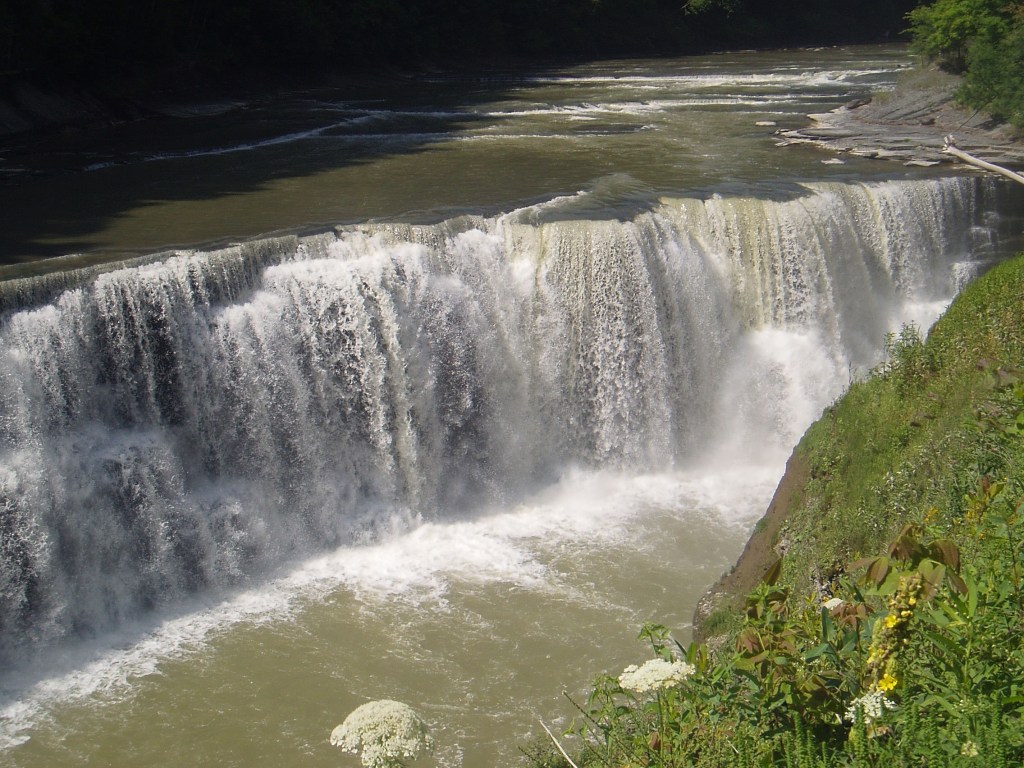
Letchworth State Park, 1 Letchworth State Park, Castile (585) 493-3600: Carved by the immense forces of ice and water during the last Ice Age, this sprawling park resides in both Livingston and Wyoming counties. Within Wyoming County lies much of the original 1,000 acres that was a gift from William Pryor Letchworth in 1907 that can be seen from the seven-mile Gorge Trail. This trail travels past his beloved Upper, Middle and Lower Falls.
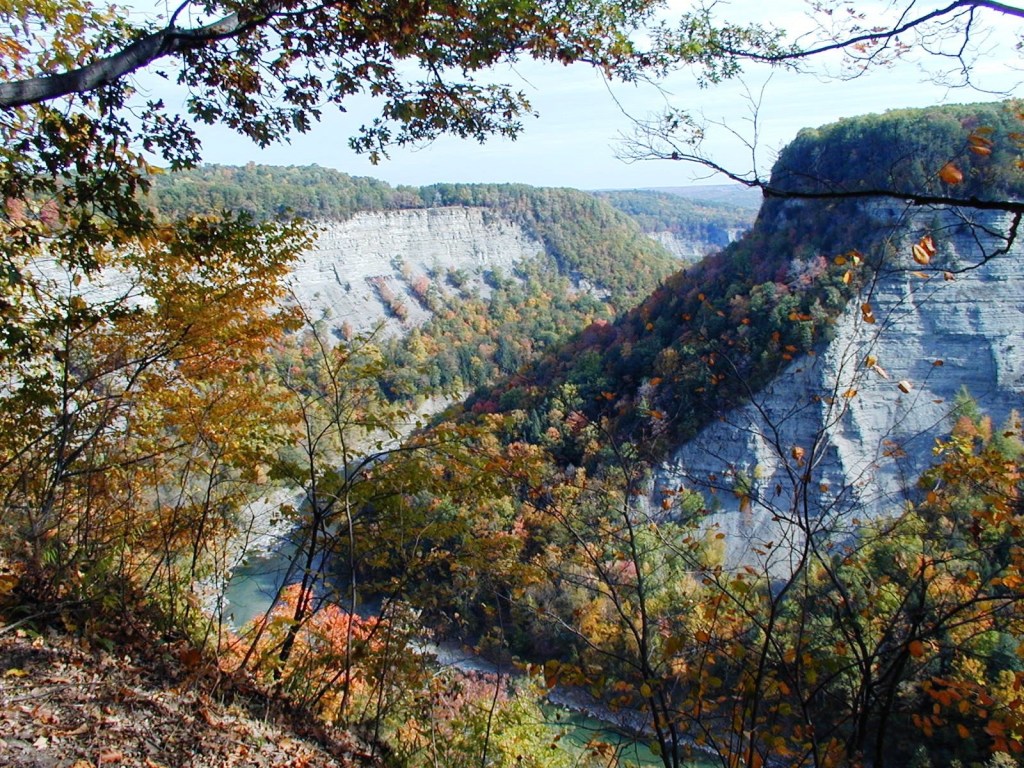
(Clockwise from bottom left) Middle Falls, Gorge Trail view from Inspiration Point, Gorge Trail View of Great Bend Gorge, Lower Falls, Upper Falls.
The Gorge Trail has many spectacular views of Sehgahunda (The Vale of Three Falls). The Portage Canyon represents a recent detour by the Genesee River since the last Ice Age some 10,000 years ago from its ancient pre-glacial valley south of Portageville. The Gorge trail also passes a 100,000 year-old interglacial valley known as Lee’s Landing. At the Great Bend Gorge, the trail overlooks a section of gorge that is about 550 feet deep and a quarter-mile wide.
At the north end of the park, find the five-mile Highbanks Trail (listed as Trail #20 on the park map), which offers its own breathtaking views of the gorge. Highlights include great views of the Mt. Morris Dan, the largest concrete dam east of the Mississippi River which was built in the early 1950s to protect the city of Rochester from flooding. This trail also affords views of the unique ridge feature known as the Hogsback, and of numerous stream crossings. This trail is a one-way out and back.
This section of the park includes the Highbanks Tent and Trailer Campground, the C-Cabin loop, and the G.W. Harvey Swimming Pool.
The Hogsback from the Gorge Trail at the north end of the park.
Mt Morris Dam (Photo Credit – Livingston County Historical Society)
Genesee Valley Greenway State Park, 1 Letchworth State Park, Castile, (585) 493-3614: This unique linear park is a 90-mile multi-use trail with one end in Monroe County and the other in Cattaraugus County. The route mainly follows the old towpath of the Genesee Valley Canal, which was in operation from 1840 until the late 1870s, and remnants of the old canal can still be seen. Come to stroll, hike or bike any part of of this trail.
The Greenway Trail affords beautiful scenic views and historic sights, including a well preserved canal lock in Scottsville (Monroe County), crossing the Genesee River along a footbridge in Mount Morris (Livingston County), observing a beautiful oxbow feature in Portageville (Wyoming County), secluded woods walking in Belfast (Allegany County), and gorgeous mountain views in Hinsdale (Cattaraugus County). Be sure to check out the communities found long the route of the Greenway for some great local fare.
The Genesee Valley Greenway trail goes past remnants of former Genesee Valley Canal Lock No. 2 in Scottville.
(Clockwise from bottom left) The trail passes an oxbow pond in Portageville, crosses the Genesee River in Mount Morris, and enters forest in Belfast.
Hamlin Beach State Park, 1 Hamlin Beach Blvd. West, Hamlin (585) 964-2462: Located on Lake Ontario with a sandy swimming beach, this park also has several miles of hiking trails.
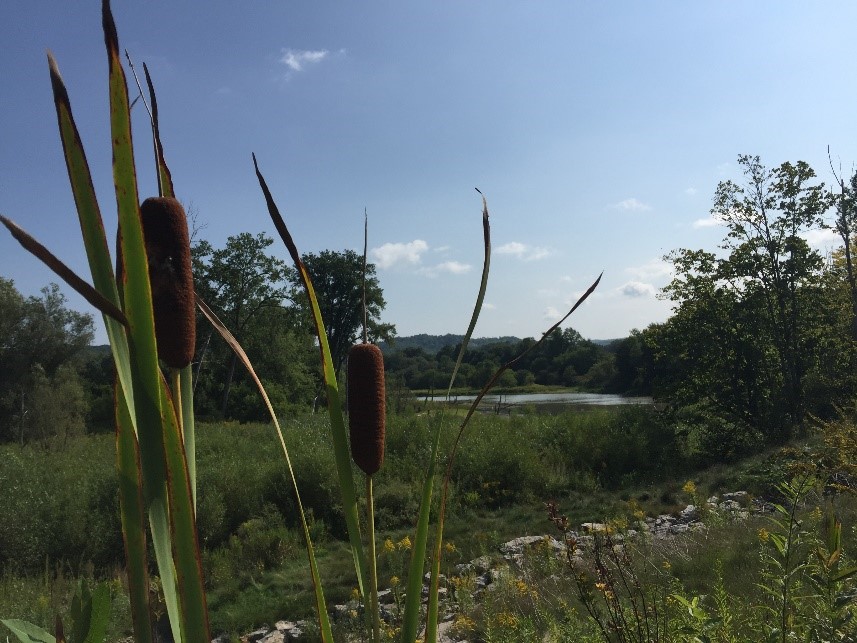
One of the most unique is the Yanty Marsh Trail, which features a boardwalk within a freshwater marsh rich in wildlife and plants, including cattails, pickerelweed, willow and milkweeds; some 200 species of birds, and frogs, snapping turtles, snakes, muskrats, beavers, mink, fox, racoon and deer.
Yanty Marsh Trail
The flat, accessible trail of one mile is also linked to the park’s history during the Great Depression when President Franklin D. Roosevelt created the Civilian Conservation Corps to put unemployed men back to work on projects that included creation of Hamlin Beach State Park. Relics of the CCC still are visible throughout the park. This includes and old farm pound once used by the CCC men for ice skating located just off the trail. When a 1998 storm severely damaged the marsh, opening it up to the damaging effects of erosion, the U.S. Army Corps of Engineers stepped in to assure the marsh wasn’t washed away forever. With control measures implemented, the marsh now fulfils its ecological role, to filtering toxins from run off into the lake, storing oxygen from our atmosphere, as wells as providing a home to many species of plants and animals.
The Devil’s Nose Trail along the lakeshore bluff offers beautiful views and a colorful history. Much folklore has been spun about Devil’s Nose and the suspected shipwrecks caused by the unique land feature. The name “Devil’s Nose” dates to 1802 but the origin of the name remains a mystery. At one time the nose was 150 feet tall and reached northward into the lake a quarter mile. A red lantern once marked the tip of the nose as a warning to passing vessels. Today the nose has all but collapsed but the shallow reef and large costal bluff remains. Although the reports of shipwrecks on the nose remain unproven, it is known that during the age of prohibition smugglers used the Nose’s coves and passages to smuggle goods and hide from authorities. After being closed for years due to overuse and erosion, the trail was refurbished and reopened in 2018. Patrons can access the trail through Area 5. A wonderful spot to watch summer sunsets, but please stay on the trail, as the banks are steep and fragile.
Darien Lakes State Park, 10475 Harlow Road, Darien Center (585) 547-9242: The hilly woodlands of this park contain nearly nine miles of hiking trails, as well as a sandy swimming beach to sunbathe or swim once a hike is done.
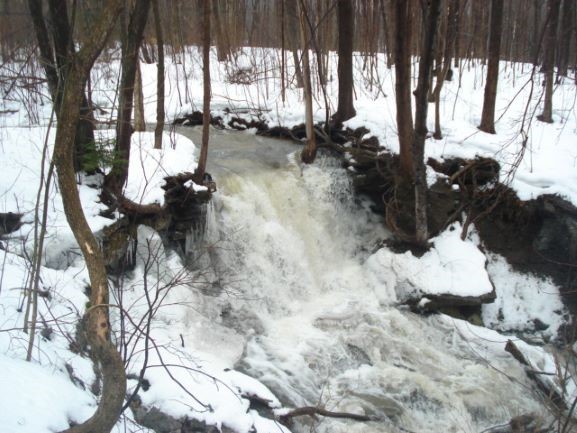
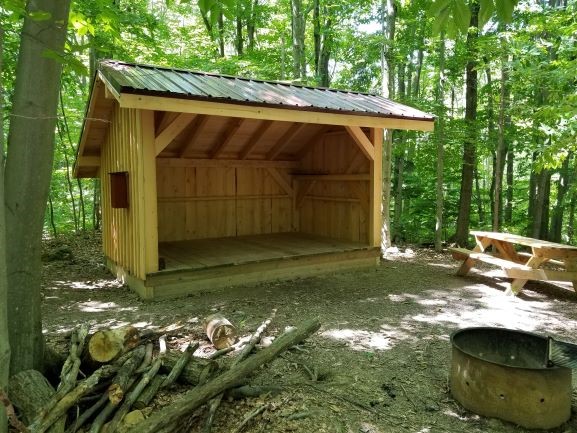
The two-mile Conservation Trail has a new lean-to ready for use, while as the southern end of the trail there is a picturesque waterfall. The trail goes by woodlands, fields and streams, offering views of a variety of wildflowers, trees, birds, insects and other interesting critters.
In the summer of 2014, a casual conversation with one of my neighbors revealed that two boys we knew with autism – one from Albany, one from New York City – each experienced an uncanny sense of calm and serenity during separate visits to Letchworth State Park in western New York.
Also, both families also had initially hesitated in bringing their special needs children to a state park for fear of their behavior not being understood or accepted. As we pondered this sense of exclusion, my neighbor Susan Herrnstein and I also wondered together if Letchworth might be the right place for a unique project to provide a safe and welcoming experience in nature for visitors with autism spectrum disorder (ASD) and other developmental disabilities.
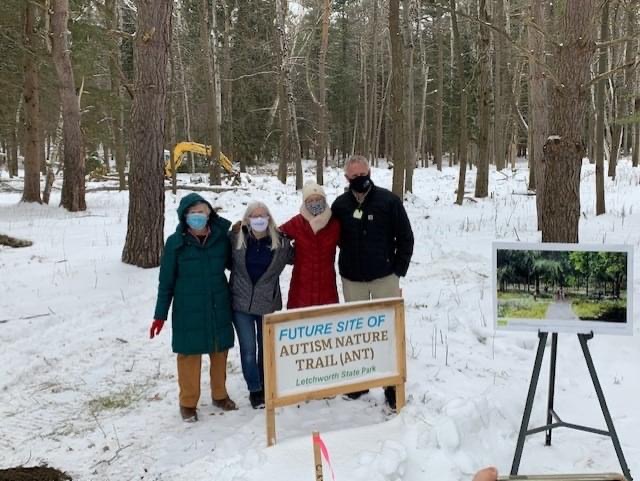
This winter, some six and one-half years later, construction began on The Autism Nature Trail (The ANT) at Letchworth State Park, the first nature trail of its kind to be designed specifically for the sensory needs of people with autism, a diverse range of neurodevelopmental conditions characterized by challenges with social skills, repetitive behaviors, speech and nonverbal communication. In February, Parks Commissioner Erik Kulleseid attended the groundbreaking ceremony and opening of the trail is set for later this summer.
Parks Commissioner Erik Kulleseid (center) joins with ANT supporters during the February groundbreaking of the trail at Letchworth State Park. (Photo Credit – NYS Parks)
Construction work continues on The ANT in anticipation of an opening this summer. (Photo Credit – NYS Parks)
As a representative for Genesee County on the Genesee Region Parks Commission, I knew from the start that an undertaking of this magnitude could strain the Parks budget, so an early commitment was made that all funds to design, build, equip, staff, program and maintain this unique trail would come from private fundraising efforts.
Herrnstein recruited her friend Gail Serventi, a retired speech/language pathologist, to join our early team, and each of us took primary responsibility for an aspect of the project, which led to some involved in the project to eventually dub us the “ANT Aunts.”
Herrnstein led a Planning Committee and found an architect, a natural playscape creator and an organization in Rochester – Camp Puzzle Peace – which specializes in an Adirondack summer camping experience for entire families living with developmental disabilities.
Serventi convened an impressive Advisory Panel of all-volunteer academics and practitioners in speech, occupational and physical therapy, autism, special education and related services. Individuals with autism and parents and grandparents of children with developmental disabilities were included in the conversation.
I organized a Fundraising Team and began soliciting donations even before a full schematic design had even been approved by New York State Parks. So far, The ANT volunteers have raised $3 million in private funds toward the ultimate goal of $3.7 million to insure programming for the trail into the future.
The fundraising campaign was managed by the Natural Heritage Trust on behalf of State Parks. The trust is a not-for-profit corporation that receives and administers gifts, grants and contributions to further public programs for parks, recreation, cultural, land and water conservation and historic preservation purposes.
Parks Commissioner Erik Kulleseid with the ANT “aunts” at the February groundbreaking for the trail. From left to right, Susan Herrnstein, Loren Penman, Gail Serventi, Commissioner Kulleseid. (Photo credit – NYS Parks)
Early along the way, our quest to create The ANT also led to a connection with the amazing Dr. Temple Grandin, a woman diagnosed with autism in 1950 at age two and now a cattle industry expert who is quite possibly the world’s most well-known advocate for the autistic community.
Now a professor at Colorado State University, she was intrigued by the idea of a nature trail designed for visitors with autism. After her diagnosis, Grandin received early intervention thanks to a determined mother and went on to earn bachelor’s, master’s and doctoral degrees. At age 39, she helped raise national attention to the issue of autism with her debut 1986 book Emergence, which described how it felt to be autistic in a neurotypical world.
Grandin went on to write a 1993 work on her professional specialty of livestock handling, and authored further books on living with autism, including Thinking in Pictures in 1995 and The Way I See It in 2008. Her life was the feature of a 2010 HBO biographical film that starred Claire Danes. That same year, Time Magazine named Grandin as one of their 100 “heroes” around the world. She was inducted into the National Women’s Hall of Fame in Seneca Falls in Seneca County, New York, in 2017.
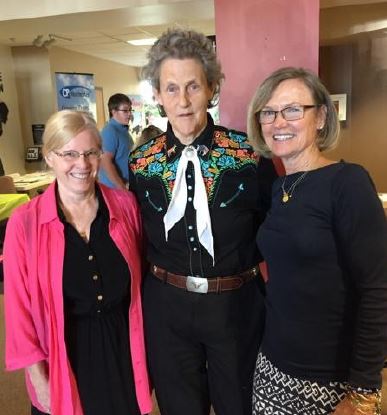
Autism advocate Temple Grandin (center), meets with Loren Penman (left) and Gail Serventi (right).
Grandin offered our ANT team very specific recommendations early on for our trail: (1) Find a place in deep nature. “Don’t build a strip mall nature trail,” she said. (2) Seek out program staff who are both autism experts and experienced in the outdoors, not one or the other. (3) Offer challenges to visitors who may never have been on a trail – but also build in predictability and choice. (4) Design a pre-walk station to orient the visitor. Make the trail a loop so that the end is visible at the beginning. (5) Position opportunities for soothing movement with seating such as cuddle swings, and provide small, private spaces for recovery from “meltdowns.”
Armed with her guidance, our team created a design for a one-mile looped trail with eight clearly marked stations, each meant for a different sensory experience. Activities along the trail support and encourage sensory perception and integration, while also providing enjoyable activities for visitors of all abilities and ages. The stations engage each individual’s auditory, visual, olfactory, tactile, vestibular and proprioceptive processing, using nature and natural materials as the tools for skill-building.
After meeting with team members during an event in Canandaigua to share our design, Grandin endorsed our plan, saying, “I’m glad that my suggestions for the Autism Nature Trail have been integrated into the final design and overall plan. The Trailhead Pavilion as a pre-walk station is important since many autistic children need to know what they’re getting into before they will engage. Cuddle swings and gliders are good choices for movement. I understand the cost involved in providing trained staff for the trail, but its success depends on people who are passionate about nature who will get the children engaged.”
Click on the slideshow above for renderings of the sensory stations ont the ANT, starting with 1) Design Zone, where visitors are able to manipulate materials from along the trail into patterns and structures, 2) Meadow Run and Climb, a place with paths to run, jump and balance along serpentine berms, 3) Playful Path, a place of twisting paths with different surfaces including pea gravel, mowed grass, and pine needles, 4) Reflection Point, a quiet point halfway on the trail under a canopy of trees, and 5) Sensory Station, where a collection of leave, moss, fossils, animal fur, acorns and other objects are to be touched, handled and even smelled.
Statistics show that young people with autism spend disproportionate amounts of time indoors, often finding comfort in digital activities which results in social isolation. This disconnectedness not only affects individuals with ASD but also can affect caregivers and entire families. The ANT is designed as a series of accessible and safe outdoor spaces in nature, yet far from the distractions and often overwhelming stimuli of everyday outside life.
The ANT also is ADA-compliant and situated adjacent to the park’s Humphrey Nature Center with full access to a large parking area, modern restrooms and WiFi. The COVID-19 pandemic is teaching us that being in nature is a saving grace, and New York State Parks have remained open throughout the crisis. We also know that people can feel uncomfortable, unwelcome and even unsafe in environments where certain behaviors are not understood, and special needs cannot be met.
Our trail also has been endorsed by Hollywood actor Joe Mantegna, an honorary member of our ANT board and a father to a daughter with autism.
“We sometimes forget that children with autism become adults with autism — and they are adults a lot longer than they are children,” Mantegna said. “The Autism Nature Trail will provide a welcoming environment for visitors of all ages to experience the excitement, joy and comfort found in the wonders of our natural world. This unique form of direct and accepting engagement with nature in a world-class park adds a new dimension of exposure, with the potential of providing a lifetime of meaningful and fulfilling experiences.”
April is Autism Awareness Month, and a special GoFundMe charity campaign has been established with a goal of seeking individual donations of $25 to support ANT programming, which is also going to be supplemented by support from the Perry Central School District.
A link to the GoFundMe campaign can be found here.
Since the start, our project has received donations ranging from $5 to $500,000 from people coast to coast. Such generous donors include the Autism Team at the Bay Trail Middle School in Penfield, Monore County, which for five years has held an annual T-shirt design benefit contest, raising more than $900. Some other outside fundraisers have included regional photographer John Kucko and Cellino Plumbing of Buffalo.
Our team thanks everyone (and there are so many) who has supported our project to help make The ANT a reality, and we are grateful for any and all future support. You can find more information here about our trail at autismnaturetrail.com
This summer, perhaps we will meet some of you on The ANT!
Cover shot – The Trailhead Pavilion at The Ant, where orientation materials will be available to help visitors better experience what the trail has to offer.
Post by Loren Penman, ANT co-founder and board member, Genesee County representative to the Genesee County Region Parks Commission; with contributions from Brian Nearing, NYS Parks Deputy Public Information Officer
Resources
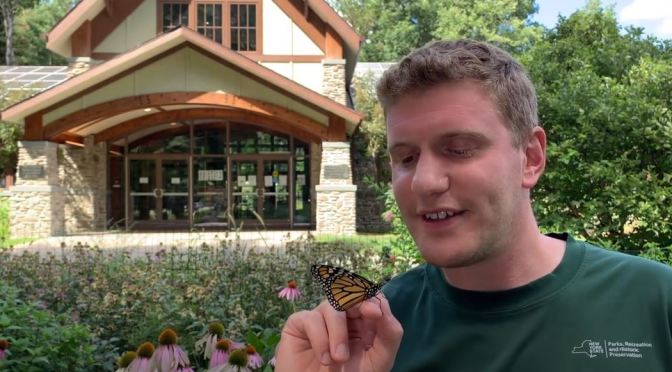
Here, Elijah Kruger, an environmental educator at Letchworth State Park, describes an autistic child’s encounter with nature, and how offering the opportunity for each person to explore nature at their own pace can promote a soothing experience.
Learn more about the life of autism advocate Temple Grandin here, here and here.
Listen to what she has to say about living with autism…
On the second weekend in March with spring in the air at Letchworth State Park, maple sap was being boiled down into tasty syrup in the newly built sugar shack at the park’s Humphrey Nature Center. Maple weekends were coming soon, and many gallons of syrup were needed to treat hundreds of visitors expected for outdoor education programs in one of western New York’s most popular State Parks.
But the next day, the sugar shack at Letchworth went cold. Because of emerging COVID-19 pandemic, Parks workers were told to immediately start working remotely from home. So public events at State Parks like Maple Weekends were cancelled. And a completely booked public field trip season at Letchworth for May and June disappeared as well.
If people could no longer brought to nature by park naturalists, perhaps those naturalists could bring nature to people remotely?
Immediately, newly hired NYS Parks Corps member Conrad Baker tapped prior video production experience to make a weekly video series called ‘Nature Detectives,’ for Letchworth State Park’s Facebook page. The approximately five-minute videos invited viewers, especially kids, to use their senses, or ‘nature tools,’ to make observations, or ‘notice nature clues’ about a mysterious plant, animal, or fungus found outdoors. Then, the video solved the mystery and encouraged viewers to find the same species in their own neighborhoods.
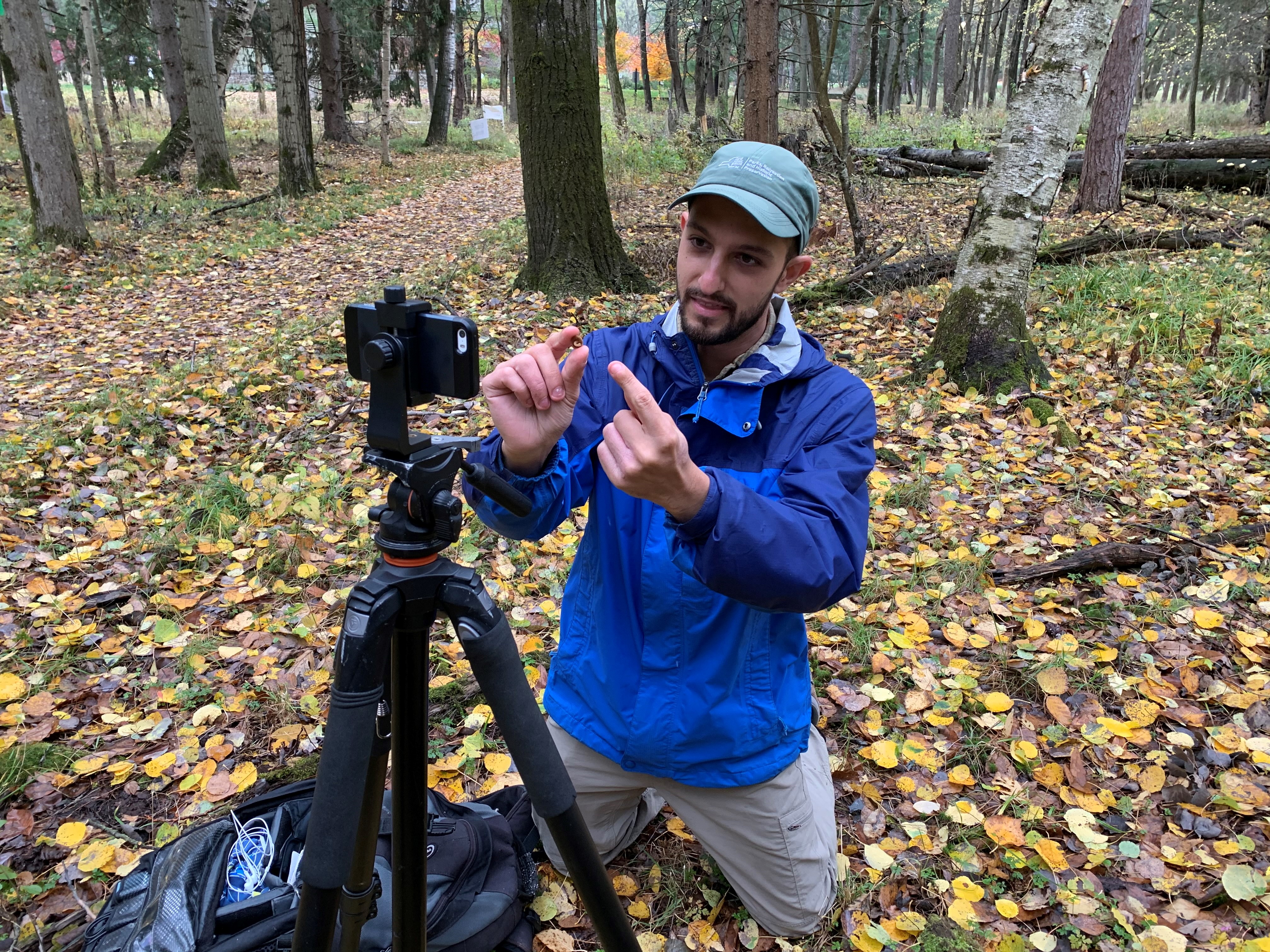
Conrad Baker tees up a video for the Nature Detective series on the NYS Parks Facebook page. (Photo credit – NYS Parks)
While using these videos satisfied the Park’s short-term goal of providing some safe, educational public programs, none of the Nature Center’s field trips were happening for the foreseeable future. But within this challenge lay an unexpected opportunity. Now unable to deliver in-person programs as usual, Environmental Educator Elijah Kruger could use the sudden schedule vacancies to adapt existing field trip lesson plans into safe, immersive, virtual programming. With Baker at the camera, Kruger took to the field.
Letchworth State Park educators and interpretive staff Mike Landowski, Steph Spittal, Karen Russell, Sandy Wallace, Doug Bassett, and Brian Scriven reviewed draft videos and gave crucial program design advice.
There are currently five virtual field trip videos on the NYS Parks YouTube channel. The playlist is accessible here.
Since previous records showed that the topics of Geology, Mammals, and Invasive Species were the most in-demand field trips, those videos were made throughout April and May, and released June 1. Next came more scientifically complex field trips about the natural world and the human relationship with it. A field trip on Forest Ecology was released Sept. 18. Life of the Monarch butterfly is the most recent to go up.
Normally, an in-person Geology field trip group would hike about three quarters of a mile between several gorge overlooks, with the trip taking about 90 minutes. But using video, viewers can move instantly between overlooks and cover the entire field trip in detail in 20 minutes. This work pushed the limits of cell phones, birding cameras, free editing software, and existing office supplies that had to take the place of top-end video gear.
A Mammalogy field trip group is often stationary, sometimes even inside the Nature Center. An educator invites the field trip group to see and feel up-close details of mammal furs and skulls to learn more about their adaptations and roles in the ecosystem. On video, such furs and skulls are presented next to real-world outdoor signs left by these animals. Close-up cutaway shots were key to highlight the animals’ homes, scat, and habitats. Deep detail in teeth, bones, and furs were only visible by building on the right cutaways.
Previously, in-person Invasive Species field trip groups never hiked through the territory now covered by the Invasive Species virtual field trip. This third field trip video was an opportunity to use cutaways and editing to visually capture complex, multi-stage forest succession changes, like deer overbrowsing, in which deer damage the ecosystem by eating away at all the young trees and shrubs.
And some improvisation was needed to get the right shots. By using rubber bands to attach lenses to cell phone cameras, close-ups showed fine details in macro shots, like crawling ticks and the hemlock wooly adelgid, a tiny insect that threatens the health of helmlock trees.
Previously, a Forest Ecology field trip group would walk about a half-mile of forest trail around the Nature Center, noticing content-relevant animals, plants, fungi, and environments along the way. Field trip video now assembles a kind of “best of” experience, with exceptional examples of lichens, woodpecker holes, short-lived fungi and quick glimpses of animals from miles apart and over several weeks into one cohesive experience.
The Life of the Monarch video is the culmination of skills and tools picked up from the four previous videos. The segments are carefully assembled from footage that was shot miles and weeks apart. Close-up cutaways show monarch butterfly handling and tagging. Footage of feeding caterpillars, time lapses of metamorphosis, and slow-motion videos of butterfly releases tie together the story of these creatures’ lives and how they benefit us in unseen ways.
The pandemic encouraged our environmental education staff to do what they do best – adapt and use the tools at their disposal to serve park visitors with safe, enjoyable, educational programs. In-person programming is now resuming with safety precautions. Still, teachers are already starting to request virtual guided field trips, where park educators join classes via video chat to answer questions and match virtual field trip video content to their class lessons.
So, what was born out of necessity and imagination has now become a regular part of Letchworth State Park’s mission to bring education nature programming to anyone, no matter where they might live.
Cover shot – Letchworth State Park Environmental Educator Elijah Kruger with a Monarch butterfly. (Photo credit – NYS Parks)












 New York State Parks and Historic Sites Blog