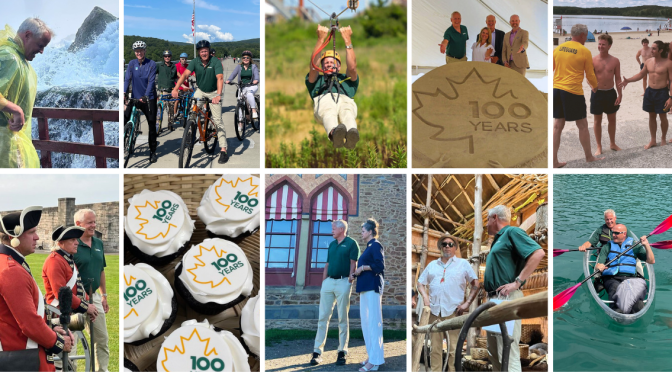
In 2024, New York State Parks and Historic Sites will celebrate our Centennial, commemorating the 100th anniversary of the founding of our parks and sites system. While we have incredible public properties older than the 100-year-old system, the Centennial celebrates the vital legislation that allowed us to build and expand our network of parks and sites, forging the system we know and love today.
As OPRHP Commissioner, I am reminded every day of the immense pride and enjoyment New Yorkers take in our facilities. To prepare New York State residents and visitors from around the world for the exciting year ahead, I recently embarked on a two-day journey to showcase the breadth of our parks and sites system, highlighting various activities and partnerships that make our system so unique.
Home of the world-famous Finger Lakes, this region stretches from sandy shores and dramatic bluffs on Lake Ontario to the forests along the Pennsylvania border.
Covering Tioga, Chemung, Steuben, Schuyler, Tompkins Yates Seneca, Cayuga, Ontario, and Wayne counties, this diverse region includes 25 parks and other facilities, two historic sites and four golf courses that span terrain featuring deep clear lakes, spectacular gorges, abundant waterfalls, and fishing and boating opportunities galore.
With fall colors well under way, check out this map to see its progress in this region, as well as across New York State.
Maps for hiking trails and a variety of other useful information on State Parks, including those in the Finger Lakes, are now available on the NYS Parks Explorer app. The free app, which is available for use on Android and iOS devices, is easy to download, user friendly and allows patrons to have park information readily available.
As with all hikes, there are a few things to remember beyond carrying a mobile phone. Check the weather forecast before you go, and dress appropriately. Wear sturdy, yet comfortable shoes or boots, bring water and snacks, and perhaps carry a camera to capture what you see. Be aware of your surroundings and mindful of hikes on steep terrain or those that go near cliff tops. Having a small first-aid kit available in case of an emergency is never a bad idea.
Hiking poles are also useful and can transfer some of the stress of hiking from your knees and legs to your arms and back.
Trail maps are also available on each individual park website page at parks.ny.gov and at the main office of each park. Be sure to download maps ahead of time or carry a paper copy as a back up
In addition to the name and distance of each designated trail in a park, the maps include facilities such as parking, comfort stations, park offices, nature centers, campsites, and boat launches. To learn more about NYS Parks trails CLICK HERE.
Hikers should plan their route in advance, know how long a trail is and how long it ought to take to finish. Since daylight is not an unlimited resource, especially in the fall as days grow shorter, tossing a flashlight or headlamp into your backpack is a good form of insurance, should you unexpectedly find yourself on the trail as dusk approaches.
Parks facilities are carry-in, carry-out, so don’t leave trash behind. Follow Leave No Trace principles to keep trails clean for everyone.
Additionally, as incidents of tick-borne diseases surge in the state, it is always important to check yourself for ticks after being outside, even if it is only time spent in your own backyard.
Lastly, as the COVID-19 pandemic continues, remember to practice safe social distancing, particularly in parking lots and at trailheads, and use face coverings when a distance of six feet cannot be maintained. To learn more about important COVID safety guidelines, CLICK HERE.
Chemung County
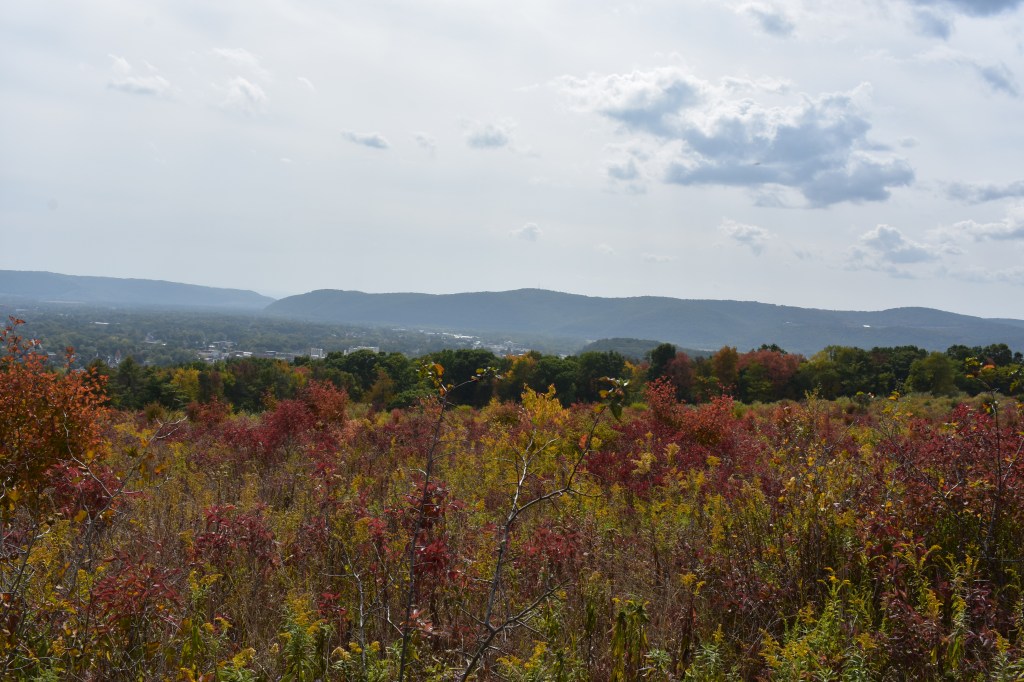
Newtown Battlefield State Park, 2346 County Route 60, Elmira (607) 732-6067: This gem of a facility is worth a visit anytime of the year, but a view of the fall foliage from the overlook might just become a new annual tradition. Crisscrossed with 19 trails, nearly all well under a mile mile, this park offers a hiker a variety of routes without steep inclines. The park is named for the battle that took place in 1779 that was part of the American Revolution and contains a replica Native American village and large granite monument. The park also has a unique Civilian Conservation Corps history with many buildings that were constructed during their 1930’s tenure, still in use and looking great! This is the perfect park for those who want to hike through history.
An informational kiosk gives visitors insight to the Battle of Newtown.
The Catherine Valley Trail, c/o Watkins Glen State Park, P.O. Box 304, Watkins Glen (607) 535-4511: Stretching from the village of Watkins Glen on Seneca Lake to the village of Horseheads, this 12-mile compact stone-dust trail follows the course of Catherine Creek and utilizes abandoned railroad and canal towpath corridors. The gentle grades make it a perfect trail at any time of the year for walking, running, cycling, cross-country skiing or snowshoeing. The trail passes a mix of wetlands and woods in a glacially-carved valley.
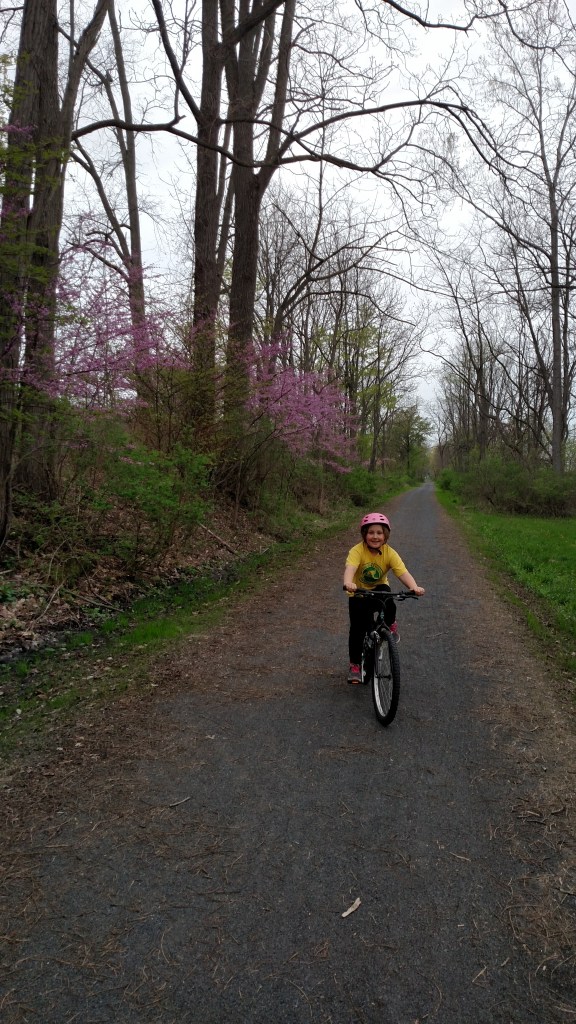
The Catherine Valley Trail is a wide, gentle path for hikers and cyclists.
Ontario County
Ganondagan State Historic Site, 7000 County Road 41, Victor (585) 924-5848: The only New York State Historic Site dedicated to a Native American theme and the only Seneca town developed and interpreted in the United States, this woodland and meadow park features eight miles of hiking trails. Part of the site is a Bird Conservation Area, so binoculars and a field guide will help visitors identify the many species of birds found here. Formerly the site of 17th century Seneca town, the site now hosts the 17,300 square-foot Seneca Arts Culture Center and a full-sized Seneca bark longhouse, which tell the stories of the Haudenosaunee (Iroquois) contributions to art, culture and society. There are two signed interpretive trails that educate visitors about the significance of plant life, Haudenosaunee culture and history. A third trail just a mile away from the center, interprets the history and the importance of Fort Hill, a large palisaded granary.
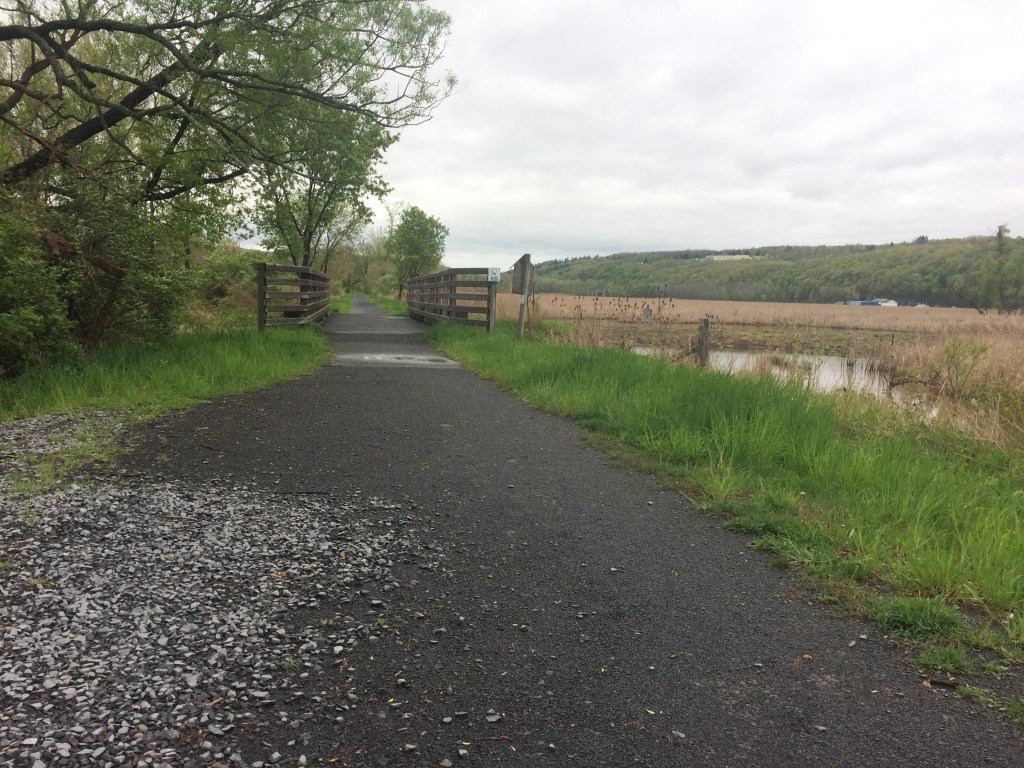
Click on the slideshow above for images from Ganondagan State Historic Site, starting with the Earth is Our Mother Trail (1), the Trail of Peace (2), the Seneca Trail south of Boughton Hill Road (3), and the Trout Brook Trail Bridge (4).
Tompkins County
Black Diamond Trail, 1740 Taughannock Boulevard, Trumansburg (607) 387-6739: A former railroad bed, the 8.4-mile Black Diamond Trail (or BDT) is a year-round, multi-use stone-dust trail on the western shore of Cayuga Lake that stretches from Taughannock Falls State Park to the City of Ithaca. The former railroad track descends 400 feet from its northern trailhead at the State Park to its southern end at the Ithaca Children’s Garden where it seamlessly links up with the city’s Cayuga Waterfront Trail along the lake. Its gentle grades make it ideal for hiking, jogging, biking, snowshoeing and cross-country skiing. The trail is named after the rail line that operated on the site from 1896 to 1959, and is thought by some to have been one of the most lavish trains in the world.
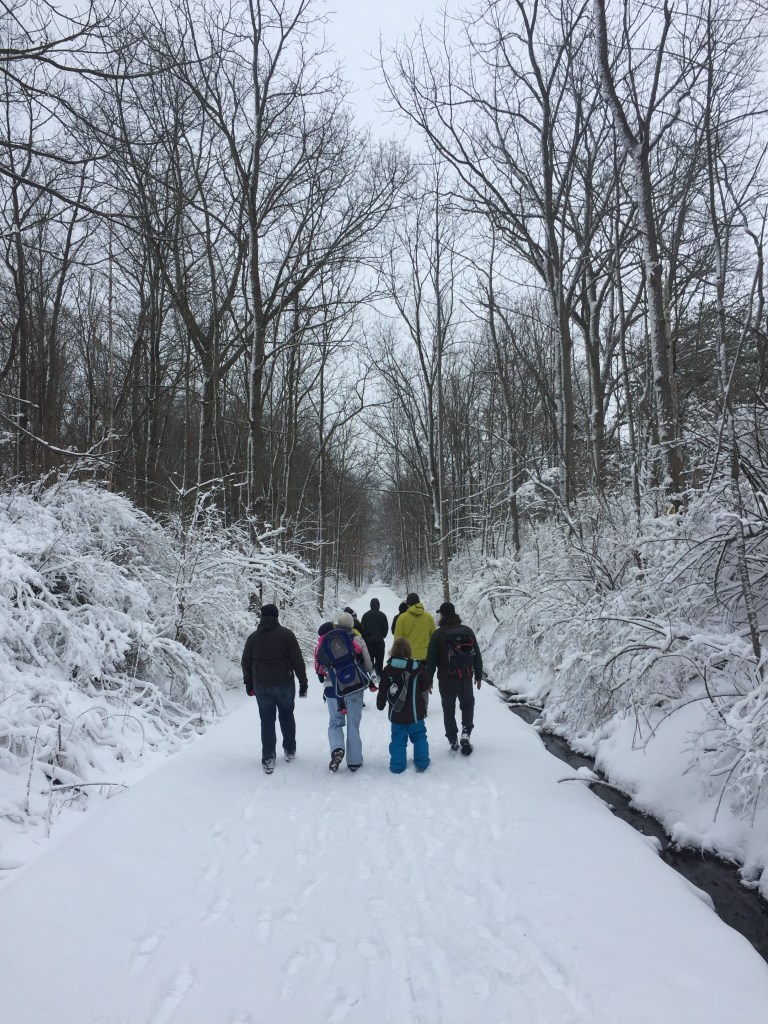
The trail is also popular in winter for hiking, snowshoeing and cross-country skiing.
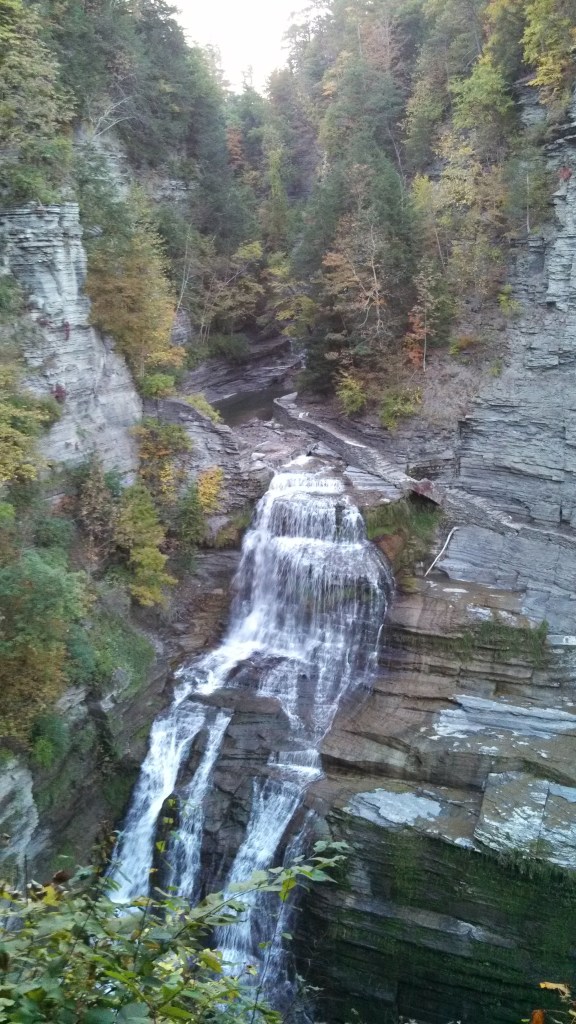
Robert H. Treman State Park, Upper Park Road, Newfield (607) 273-3440: With more more than ten miles of trails to experience, the one-mile upper loop along the rugged Enfield Gorge is spectacular any time of the year, but particularly when its foliage is ablaze. The ascents and descents here can be steep. Start in the parking lot by the Old Mill to begin a half-mile hike down the gorge trail to the 115-foot Lucifer Falls. After taking in the view near the lip of the falls, then descend a staircase along a sheer wall of stone hundreds of feet high that allows a full view of the falls before descending again through the woods to the crossover bridge to the cliff staircase/Rim Trail. Then climb the 222 beautiful stone steps of the Rim Trail for stunning views of the valley below _ and maybe to catch a breather. Continuing on the Rim Trail back to the Old Mill will complete the loop.
The dramatic Lucifer Falls plunges 115 feet at Robert H. Tremain State Park.
Tioga County
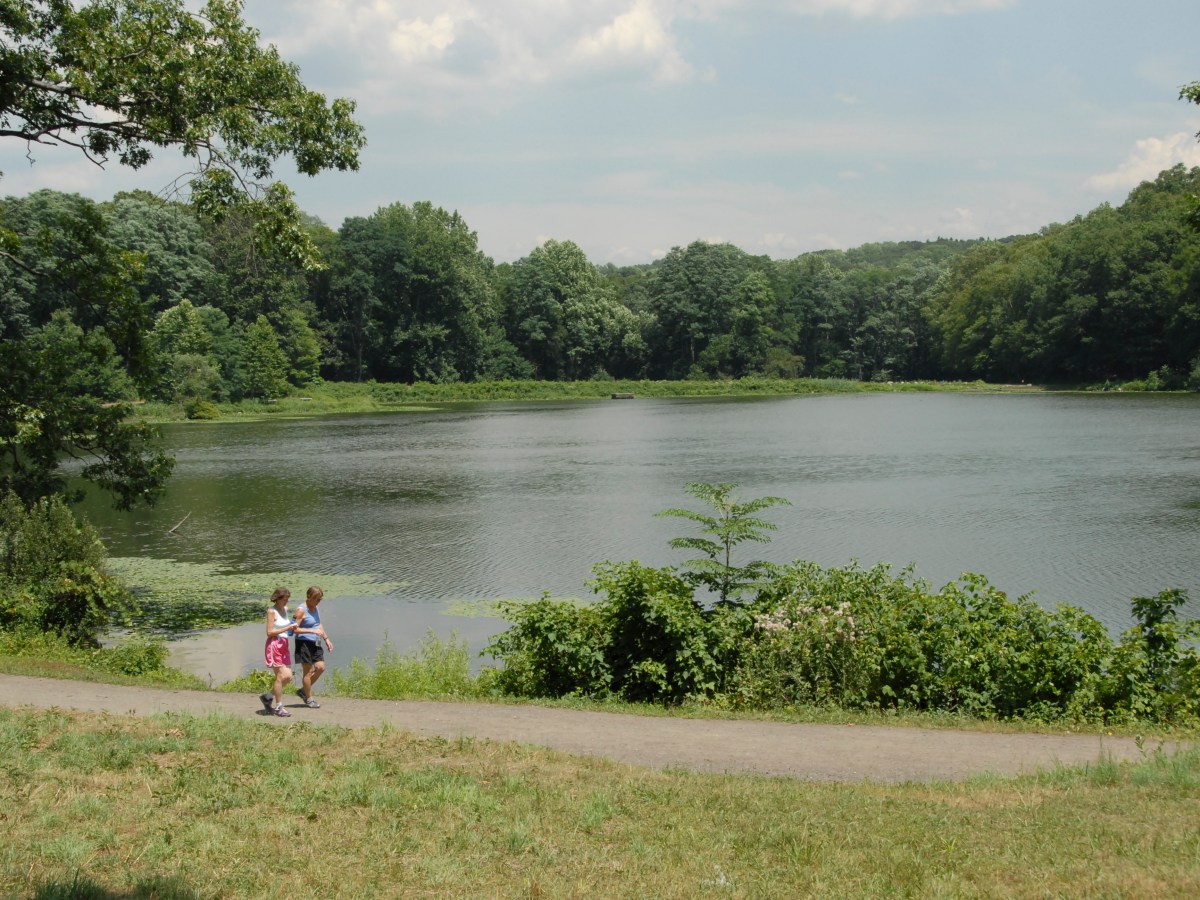
Two Rivers State Park Recreation Area, Banzhoff Road, Waverly (607) 732-6287: A five-minute drive from the village of Waverly near the Pennsylvania border, this park offers a beautiful hilltop vista of the Chemung and Susquehanna River valleys below to the small babbling brooks beginning their journey to the Chesapeake Bay. It contains 4.7 miles of hiking trails that descend from the forested hills to streams that feed the Waverly reservoir system. Mountain biking is also allowed on these trails, so cyclists and hikers need to stay alert to each other. Trails here connect to the village park of Waverly Glen.
While it may be best known for world-class boating and fishing, the Thousand Islands region of State Parks also offers miles of hiking trails along shorelines and through forests, stretching from Lake Ontario north along the St. Lawrence River and finally to the shores of Lake Champlain. Covering Lewis, Jefferson, St. Lawrence, Franklin, and Clinton…
Centered on the confluence of the Hudson and Mohawk Rivers, between the Adirondacks and the Catskills, the Saratoga/Capital Region of New York State Parks offers opportunities for both hikers and paddlers. Covering Albany, Schenectady, Rensselaer, Saratoga Washington, Schoharie, Montgomery and Fulton counties, the region includes a dozen state parks, as well as eight historic sites…
With summer now in full swing, hiking trails are calling from the Central Region of State Parks, which stretches from Lake Ontario to the Southern Tier and Pennsylvania border. The region includes glacial lakes, sandy beaches, segments of the historic Erie Canal, and dramatic waterfalls. Covering Broome, Chenango, Cortland, Delaware, Herkimer, Madison, Oneida, Onondaga, Oswego…
With autumn leaves now turned, hiking in the Palisades region of State Parks offers spectacular views of the Hudson Valley and the Catskills to go with a fascinating history that includes an outlaw’s lair, the state’s early iron industry, and a traitor’s secret meeting place. Located on the west side of the Hudson River, this…
With more than 2,000 miles of marked trails across New York, the State Parks have something for hikers of every ability. That includes the beautiful Taconic Region, located on the east side of the Hudson River and stretching through Columbia, Dutchess, Putnam and Westchester counties. Palatial estates, highland trails, Hudson River vistas and woodland campgrounds…
State Parks contain a diversity of habitats, from forest and fields, to shrub swamp, marshes and streams. All these landscapes support a wide variety of native plants.
As part of efforts at Parks to restore land and protect biodiversity, it is important to have the right plants for the right habitats in order to support healthy ecological function, provide critical habitat for wildlife and reduce the threat from invasive species.
Such projects require a source of plants that are native to the area. Since it can be difficult to find such plants commercially, the Plant Materials Program was started at Sonnenberg Gardens & Mansion State Historic Park in 2016.
This program was created by the Finger Lakes Environmental Field Team, which was working at Ganondagan State Historic Site in Victor, Ontario County, to restore a grassland habitat critical for endangered birds. And the job called for 200 different species of native plants.
Since then, such plants have been grown in the Sonnenberg’s historic greenhouses in Canandaigua, at the north end of its namesake lake in the Finger Lakes region, to cover parks projects in the eastern part of New York. Many of the Sonnenberg greenhouses had been vacant for years, so this was a perfect match for the facility.
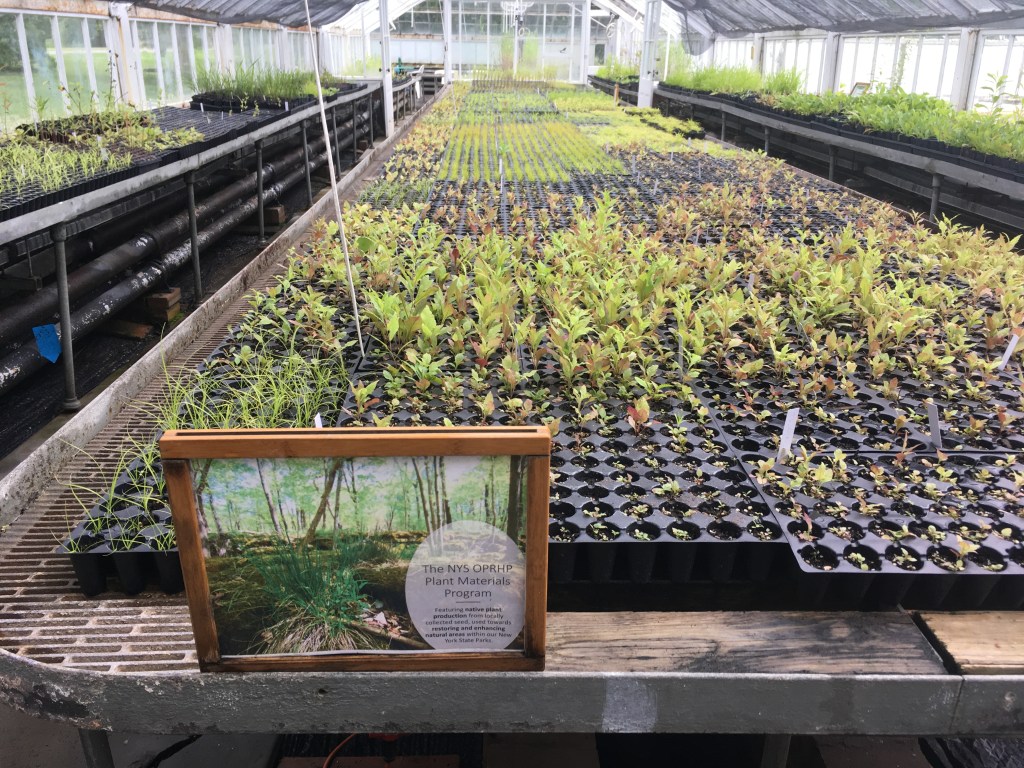
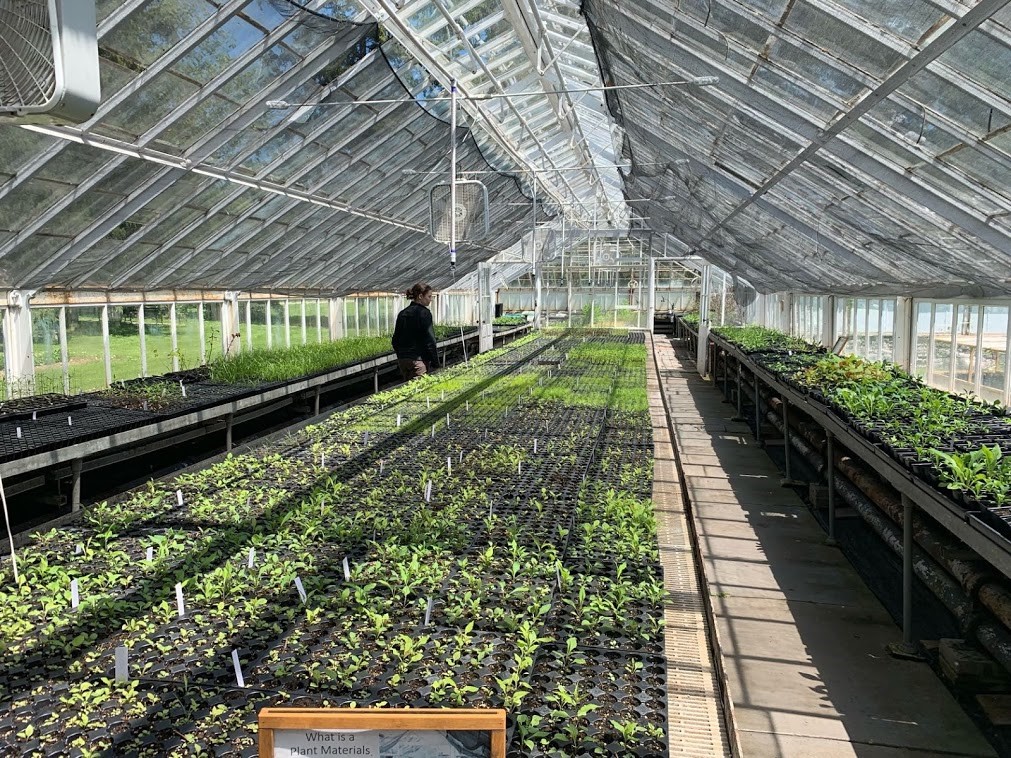
Seedings for native plants, grown from seeds hand-collected in the field by State Parks staffers at the Plant Materials Program, fill the greenhouses at Sonnenberg.
Plant Materials Program Coordinator Brigitte Wierzbicki, Lead Technician David Rutherford and technician Elizabeth Padgett, supported by seasonal staff, partners, and interns, run the program. To fill orders, they identify native species in the field, sustainably collect seeds, propagate those seeds in the greenhouses, and deliver plants back to project sites.
Now in its fourth year, the Ganondagan project aims to recreate the oak savanna grasslands found there in the 1600’s, when the land was managed by the Onöndawá’ga (Seneca) people. This last season, the Plant Materials Program provided more than 5,000 plants towards this project, and over 100 pounds of hand-collected seed have been sown on site.
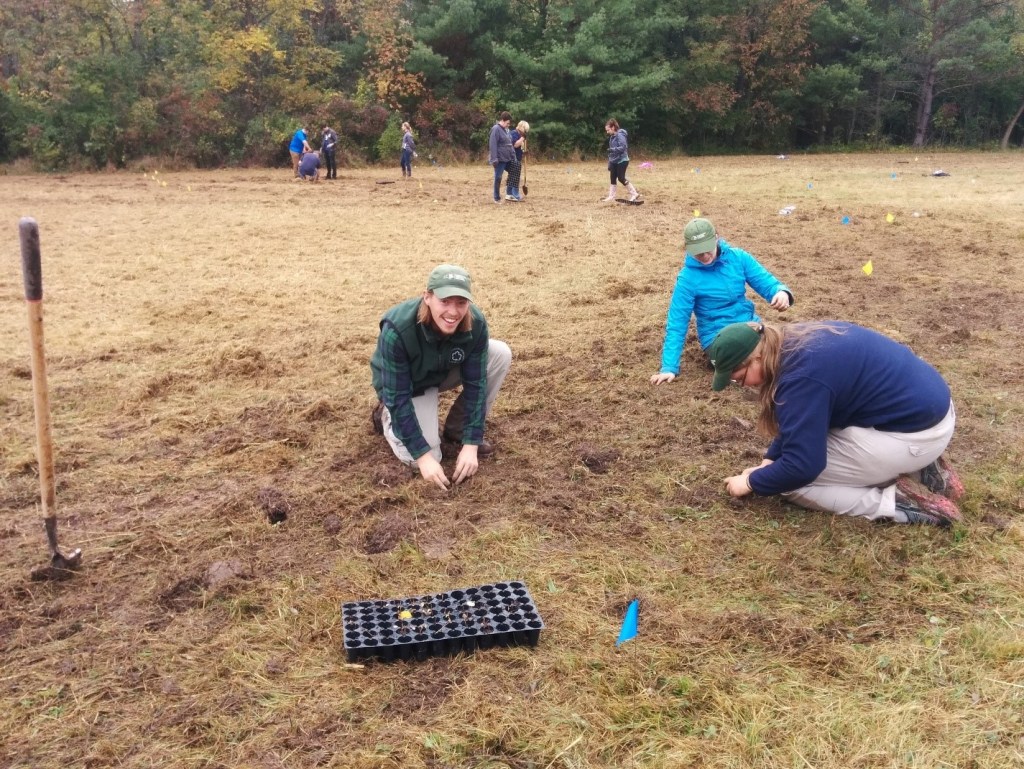
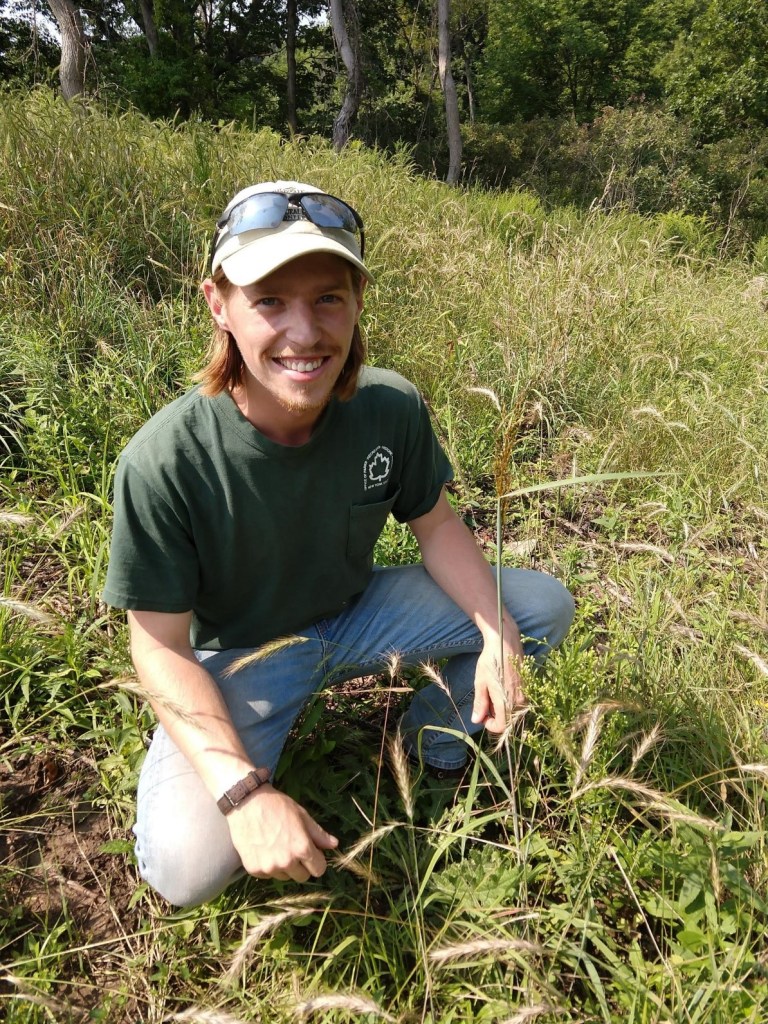
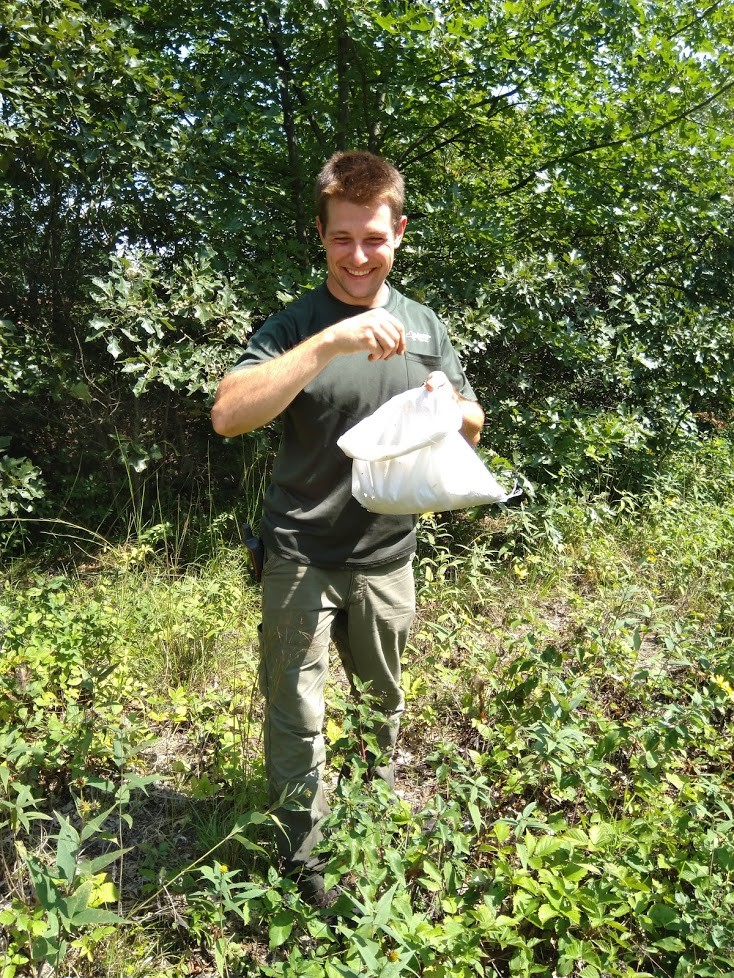
Seedlings in the Sonnenberg greehouse (1); Kyle Webster and Environmental Field Team staffers plant asters at Cayuga Lake State park (2), Webster with newly-established wild grasses at Canondagan State Historic Site (3); and Plant Matertials Program Lead Technician David Rutherford collects lupine seed at Saratoga Spa State Park (4).
Currently, the Plant Materials Program provides for environmental stewardship projects across six State Park regions of the state, from the Finger Lakes Region and eastward to the Taconic Region. The program also works with Parks Western District Nursery and its Native Landscape Resource Center, managed by Kevin McNallie at Knox Farm State Park in Erie County, which provides native plantings for the western regions of the state.
Additional guidance on plant suitability for specific habitats or sites is provided by NY Natural Heritage Program.
Why Native Plants?
A wealth of literature points to native plants and species diversity as critical factors for successful restoration. Native plantings are better able to compete against invasive species than non-native plants. Planting more native species also increases both plant and animal diversity. Ensuring that plants are not only native, but regionally appropriate and genetically diverse increases the likelihood that the plantings will be successful and contribute to their local ecosystem.
Plant Materials Program staff search for wild, naturally-occurring populations for each project within the same ecoregion. Ecoregions are zones defined by their plants, soil, geography, geology, climate, and more. Plants that live in the same ecoregion have adaptations that help each species survive in those precise conditions, so seed has the best chance of survival if it is replanted within that zone.
New York State is split into 42 different ecoregions, with each region warranting a different seed collection so that seed is often not shared across projects. In the Sonnenberg greenhouses, plants are not allowed to hybridize (or cross-pollinate) with plants from other regions. Preserving the plant genetics of each ecoregion is important to maintain each unique habitat.
Science of Collecting Native Seeds
Seed collection involves more than just taking a seed from a plant. Our collectors ensure collections aren’t harming the population. Only a small fraction of seed is taken from each plant, so that enough seed remains to support that population, and to serve as food for insects and other animals.
Populations of a plant must be large enough to support seed collection. Areas are monitored before and after collection, and they are not collected from again for multiple years. The conservation of intact ecosystems is more effective than planting and restoring ecosystems, so it is important that seeds are collected in a way that protects existing plant populations.
Measures are also taken to capture genetic diversity, including collecting multiple times a season and using field techniques to collect evenly or randomly across a population. Collectors avoid selecting for specific traits, as that can reduce a population’s ability to adapt, and can in turn negatively impact other populations.
Native Plants Help an Endangered Butterfly
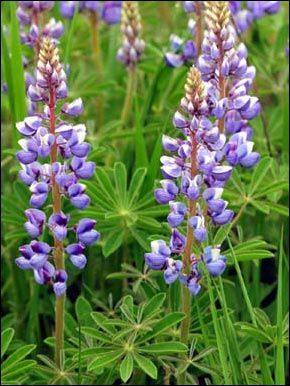
In the Capital Region, the Plant Materials Program collects wildflower seed to support Parks Stewardship staff in restoring rare butterfly habitat. Saratoga Spa State Park is home to the state and federally-endangered, and globally-rare Karner blue butterfly. This small butterfly lives in pitch pine-scrub oak barrens, and during its caterpillar stage, it feeds on only one wildflower: the blue lupine (Lupinus perennis).
Blue Lupine. (Photo Credit- U.S. Fish and Wildlife Service)
Karner blue butterfly on lupine. (Photo credit- C. Voight)
Picking seeds from the right lupine plants is extremely important, as the chemical makeup of lupine has been shown to vary across the range of the species. Introducing a new strain of lupine might be harmful or even toxic for the butterflies. For example, the same species of lupine growing in another state could be different enough from the ones growing at Saratoga Spa State Park that, if planted there, could be toxic to the Karner blue butterflies living in the park.
A 2015 study found that survival and development of the Karner blue was linked to which lupines caterpillars had fed upon. Expanding lupine at Saratoga Spa through local seed is the safest option to protect the unique genetics of both the butterflies and lupine.
New Life for Sonnenberg’s Historic Greenhouses
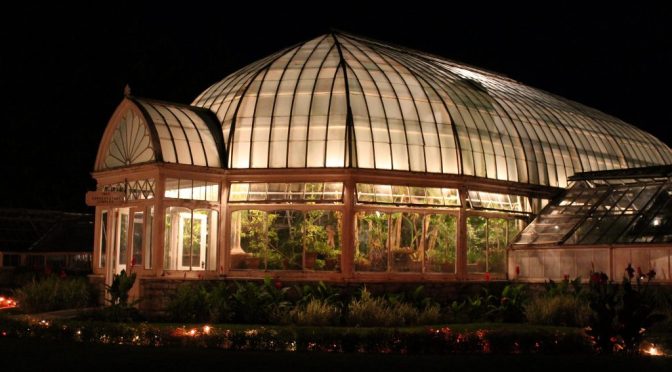
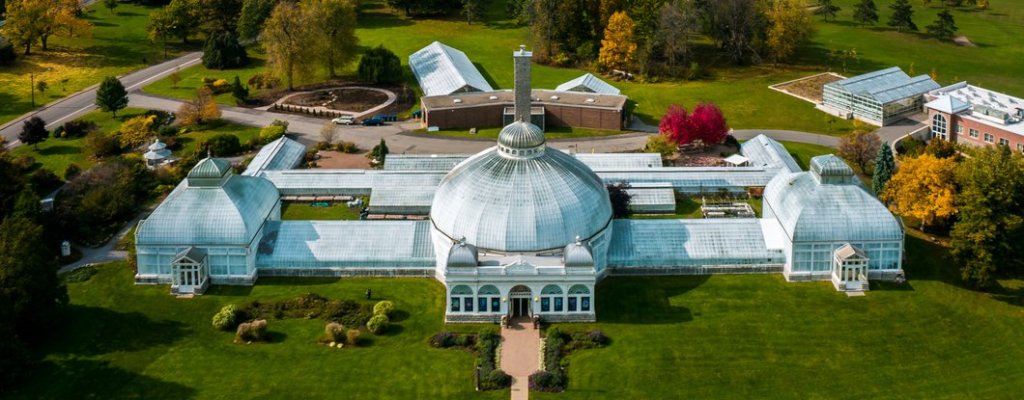
Each spring, the Plant Materials Program grows a new cycle of plants in Sonnenberg’s historic Lord & Burnham greenhouses. These are greenhouses which date back to the Gilded Age of the early 1900s and reflect the botanical passions of the home’s original residents, Frederick Ferris Thompson and Mary Clark Thompson, two prominent philanthropists.
The historic greenhouse complex at Sonnenberg Gardens and Mansion State Historic Park. (Photo Credit- Sonnenberg Gardens and Mansion)
One of the greenhouses that is currently under restoration. A not-for-profit group that manages the site is fundraising to help support such work. (Photo credit- Sonnenberg Gardens and Mansion).
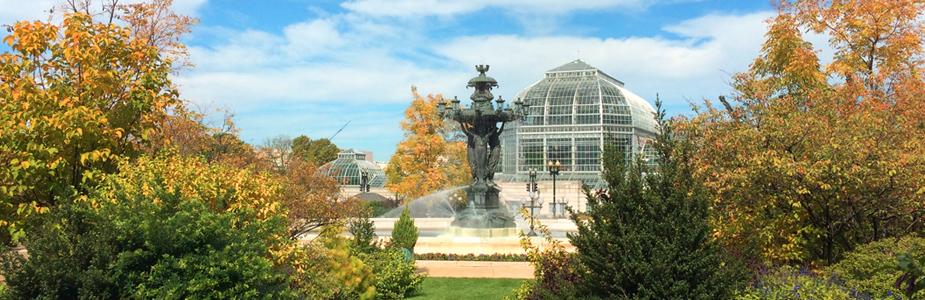
At the time of construction between 1903 and 1915, the greenhouses at Sonnenberg reflected state-of-the-art technology. Only a handful of other such Lord & Burnham structures survive today, with some major examples found at the New York Botanical Garden in The Bronx, The Buffalo and Erie County Botanical Gardens, the United States Botanic Garden in Washington, D.C., and the Phipps Conservatory and Botanical Gardens in Pittsburgh.
Other examples of Lord & Burham greenhouse complexes, including (1) New York Botanical Garden, (2) Buffalo and Erie County Botanical Garden, (3) the Phillps Conservatory, and (4) U.S. Botanic Garden.
This 50-acre estate and its greenhouses, gardens, and Queen Anne-style mansion are all open to the public from May through October. A portion of the greenhouses interprets the legacy of the site, including a palm house, orchid house, and cactus house.
Patrons can tour the greenhouses utilized by the Plant Materials Program and learn about the thousands of plants grown for restoration of native ecosystems. Housing the program at Sonnenberg expands the interpretative value for park visitors and supports the restoration of these historic structures.
During this long winter, know that the next generation of native plants for New York State Parks projects is being nurtured in a historic greenhouse complex that dates to the Gilded Age, and come spring, will be ready to preserve and protect some of our most precious places.
Sonnenberg Gardens and Mansion State Historic Park in winter. The site is open May 1 to Oct. 31 each year.
Post by Brigitte Wierzbicki, Plant Materials Program Coordinator
Cover photo by Sonnenberg Gardens and Mansion State Historic Site
Consider Native Species When Planting At Home
Check if you have natives already coming up in your garden or yard. It is likely that you already have some native plants that are providing habitat, and these will be best adapted to your local ecosystem. Use indentification resources to see what is from NY or New England. Apps likeiNaturalist, online guides like GoBotany, or field guides like Newcomb’s (Newcomb’s Wildflower Guide, Lawrence Newcomb) are great resources for getting started.
Native Plantfinder is a great resource to choose which plants are native to your zip code! It also ranks plants based on the number of native butterflies and moths that can use the plants—meaning you will be bringing in more wildlife into your garden including pollinators and birds. It is still in development and only a small fraction of these will be available commercially, so double check your favorites with what’s available.
Use the New York Flora Atlasto ensure the plant you’re interested in is native to the state. Even better if it’s native to the county you’re planting in!
Utilize the New York State Department of Environmental Conservation Saratoga Tree Nursery. The 2020 Seedling Sale is currently ongoing and is an affordable way to purchase native plants and support environmental conservation work in the state.
Check out the Native Plant Nursery Directoryto find your local native plant nursery. Request that your local garden center carries native plants, and ideally, ones that are from New York. Often the native species in nurseries are sourced from outside of New York, or even the southern U.S. These won’t be as well adapted to New York.
Avoid cultivars of native species. You may find some natives in nurseries with different names signifying they have been bred for different colors or flower shapes. These changes can reduce the ecosystem function of the plants, or even populations beyond your garden if they are able to breed. Our native species evolved with the native pollinators, and changes can make the plants completely unusable for native pollinators.
Do not collect from the wild for your garden. Taking from the wild can be more damaging to the ecosystem than the benefit that it may bring to your garden. Collecting from the wild is also often illegal. Many factors need to be considered for safe harvests, and many of our plant populations are experiencing declines due to development, habitat fragmentation, invasive species, deer overabundance, climate change, and more. It can be hard to know if the seeds you’re taking will damage the population or remove a critical food source, so don’t take the risk!
References
Bakker, J.D. & Wilson, S.D. (2004) Using ecological restoration to constrain biological invasion. Journal of Applied Ecology, 41, 1058–1064.
Fargione, J.E. & Tilman, D. (2005) Diversity decreases invasion via both sampling and complementarity effects. Ecology Letters, 8, 604–611.
Handel, K. (2015) Testing local adaptation of the federally endangered Karner blue butterfly (Lycaeides melissa samuelis) to its single host plant the wild lupine (Lupinus perennis). (Electronic Thesis or Dissertation).
Hereford J. 2009. A quantitative survey of local adaptation and fitness trade-offs. American Naturalist 173:579-588.
Johnson R, Stritch L, Olwell P, Lambert S, Horning ME, Cronn R. 2010. What are the best seed sources for ecosystem restoration on BLM and USFS lands? Native Plants Journal 11(2): 117-131.
Kline, V.M. (1997) Orchards of oak and a sea of grass. In: Packard, S.; Mutel, C.F., editors. The Tallgrass Restoration Handbook. Washington, DC: Island Press:3-21.
Omernik, J. M. (1987). Ecoregions of the conterminous United States. Annals of the Association of American geographers, 77(1), 118-125.
One of the oldest outdoor winter games in North America is again coming to the Ganondagan State Historic Site in Ontario County.
Already centuries old when Europeans first arrived in this country, the game of “snow snake” will be featured at our family-friendly annual Native American Winter Games on February 22.
Earlier that week from February 18 to 21, there also will be a variety of wintertime activities for visitors at Ganondagan, the state’s only historic site dedicated to Native American history and the only representation of a Seneca town in the United States.
Our winter activities will include making a miniature wooden bow from ash, as well as Native American storytelling, Iroquois social dancing, and a variety of outdoor activities including snow shoeing, dog sled demonstrations, and the snow snake. All events are weather permitting, of course.
And not to worry, any first-timers. The game does not involve an actual snake…
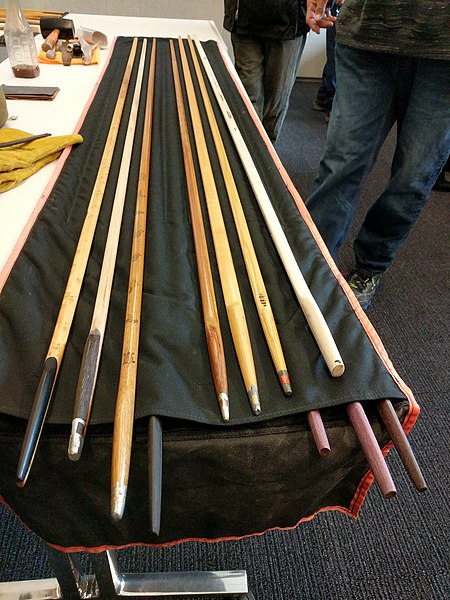
Rather, this traditional game once widely played by the Iroquois and many other Native American tribes across North America uses a long smooth stick – known as a gawasa – that is thrown down a trough cut into the snow. The hardwood stick has a tapered head to help it clear potential obstructions, giving it a snakelike appearance as it slides and shimmies down the track.
Snow snakes can be six feet long or more. Smaller versions called “mud cats” are about half that long.
Examples of snow snakes at Ganondagan State Historic Site (Photo Credit: Wikipedia Commons)
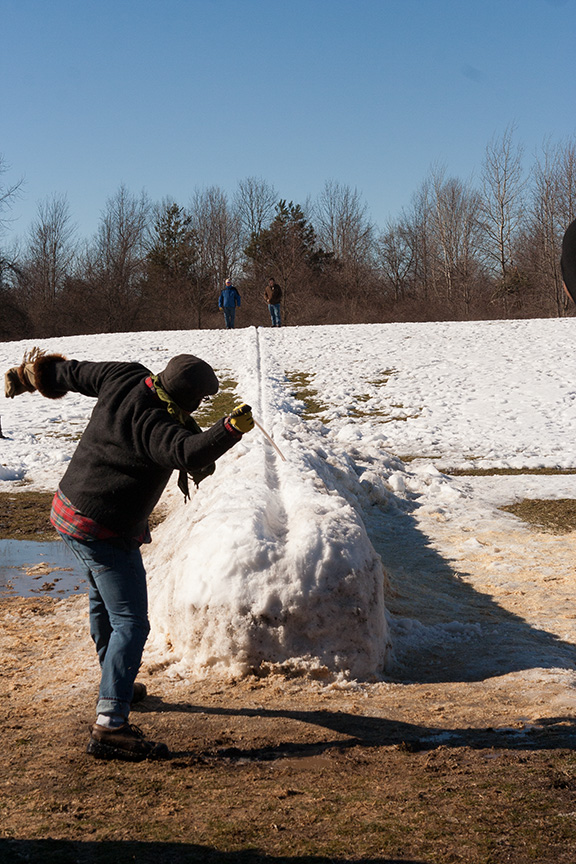
Historically, the track was made by dragging a log through the snow, sometimes a half a mile or more. Called a gawan’go, the U-shaped trough could be level or on gently downward sloping terrain, and different types of sticks were used, depending on whether the condition of the snow was wet, dry, icy, powdery or something else.
Players also used mixtures of special waxes, tallows and oils on their snakes to get them to slide easier, and those mixes were closely-guarded secrets, as a well-tossed snake could travel a great distance. If it is fresh snow, wet snow, or icy conditions the snow snake will slide faster when it is properly waxed for the conditions. Today, ski wax might be part of the mix.
This 1909 published account by New York State Museum official Arthur C. Parker who witnessed the contests described the action as a player “grasps his snake by the tail, his thumb and middle-finger grasping the sides two or three inches from the end, and his index-finger bent and tightly pressed against the grooved end. The palm of the hand of course is turned upward. Dashing forward with every trained muscle in play, he hurls the snake into the trough, using all his skill to throw accurately and steadily.”
Illustration in the 1909 report by New York State Museum official Arthur C. Parker, “Snow Snake as Played by the Seneca-Iroquois.” American Anthropologist, vol. 11, no. 2, 1909, pp. 250-256. JSTOR, www.jstore.org/stable/659466
Competitors tended to be boisterous, and could use what now is called “trash talk,” shouting derision and discouragement as a player drew back for throw, according to this account. If a throw was successful, the snake would move rapidly down the track, with Parker writing, “In its swift passage through the trough, the flexible stick twists and bends in truly snake-like fashion, its upturned head adding greatly to the resemblance.”
Teams could compete for points, and often times, wagers were made on the outcome, so players kept their own special materials and techniques as closely-guarded secrets. Prized snakes were carefully preserved and stored for use year after year.
Per Parker:
“Snow snakes are made of various kinds of hardwood, such as maple and walnut, it being believed that some woods are better adapted to certain kinds of snow. This special knowledge is kept secret by the various experts in the art of snow-snakery.”
During the traditional midwinter festival, Ganayusta, two rival brotherhoods or clans seek to outdo each other in the game, he wrote. Assistants for each team would select the snow snakes to be used, and rub them with various substances “to overcome the peculiar kind of friction exerted by various kinds of snow.”
Once the snake came to a stop, it could either be left in place to be possibly pushed aside or even cracked by a rival’s oncoming snake, or removed after its location has been marked. A good player could throw a snake on a level track from 300 to 400 yards, or even further if the track sloped downward enough, Parker wrote.
But woe to the player who made a poor throw, as they came in for some serious ribbing from other players and onlookers, according to Parker.
“If the (snake) is not thrown at the proper angle, its head may run into the snow when it strikes the track, that is, “spear the track.” This accident brings forth many sarcastic jests, such as, “Are you afraid the trough will get away?” “What’s the matter? Trying to nail down the snow?” or “Thinks he is spearing fish!”
At our winter festival, people are going to be a lot more encouraging to those who will throw the snake, whether they are experienced or first-timers who can start out by throwing the smaller mud cat. So, come to Ganondagan and try your hand at a very ancient way of wintertime fun!
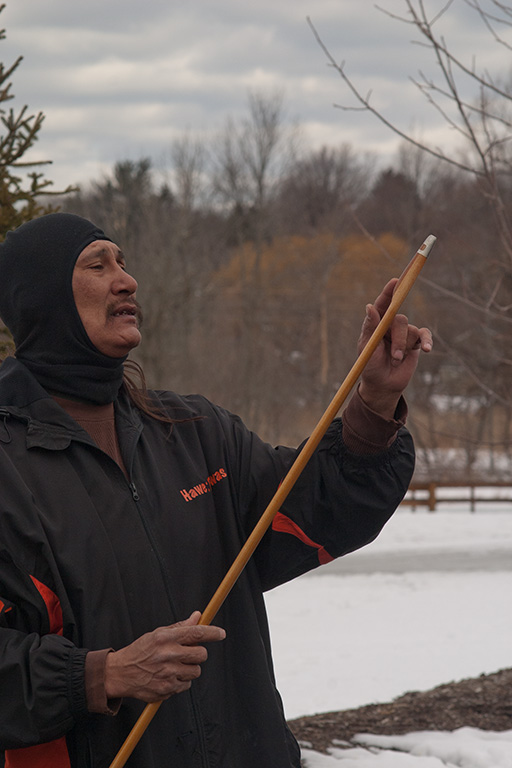
Snow Snake teacher Snooky Brooks describes throwing technique. (Photo Credit- David Mitchell)A player at Ganondagan throws the snow snake at the head of the track. (Photo Credit- David Mitchell)
Post by Peter Jemison, park manager of Ganondagan State Historic Site, and Brian Nearing, Deputy Public Information Officer
Cover Photo: Snow Snake teacher Snooky Brooks speaks at a demonstration at Ganondagan. Photo Credit- David Mitchell
Sources:
Parker, Arthur C. “Snow-Snake as Played by the Seneca-Iroquois.” American Anthropologist, vol. 11, no. 2, 1909, pp. 250–256. JSTOR, www.jstor.org/stable/659466.
The New York State Office of Parks, Recreation and Historic Preservation (State Parks) staff members at Ganondagan State Historic Site recently worked with members of the Excelsior Conservation Corps (ECC). The ECC is a non-profit organization within the Student Conservation Association (SCA). The members involved in this program range from ages 18-25 and learn skills and methods to help restore, protect and enhance New York’s natural resources and recreational opportunities.
Ten members of the ECC were tasked with invasive plant species removal from various locations and GPS monitoring of certain invasive plant species within the Ganondagan State Historic Site located in Victor, NY. Invasive plant species are non-native species that can cause harm to the environment, the economy, or to human health. Because these plants are not native in these habitats, they can cause or contribute to habitat degradation and loss of native species.
Wild parsnip in full bloom, notice the yellow-green flowers that look like Queen Ann’s lace and dill.. Photo by ECC
Giant hogweed (Heracleum mantegazzianum), which is a tall flowering invasive plant that is infamous in many areas of New York, not only disrupts the environment in which it grows but can also be very harmful to humans. If the sap from the stem comes into contact with the skin, it can cause severe burns and make skin more sensitive to ultraviolet radiation provided from the sun. Fortunately, no giant hogweed has been found at Ganondagan State Historic Site, but the site has become a host to a closely related and invasive plant called wild parsnip. Wild parsnip (Pastinaca sativa), has similar effects to giant hogweed when it comes into contact with unprotected skin.
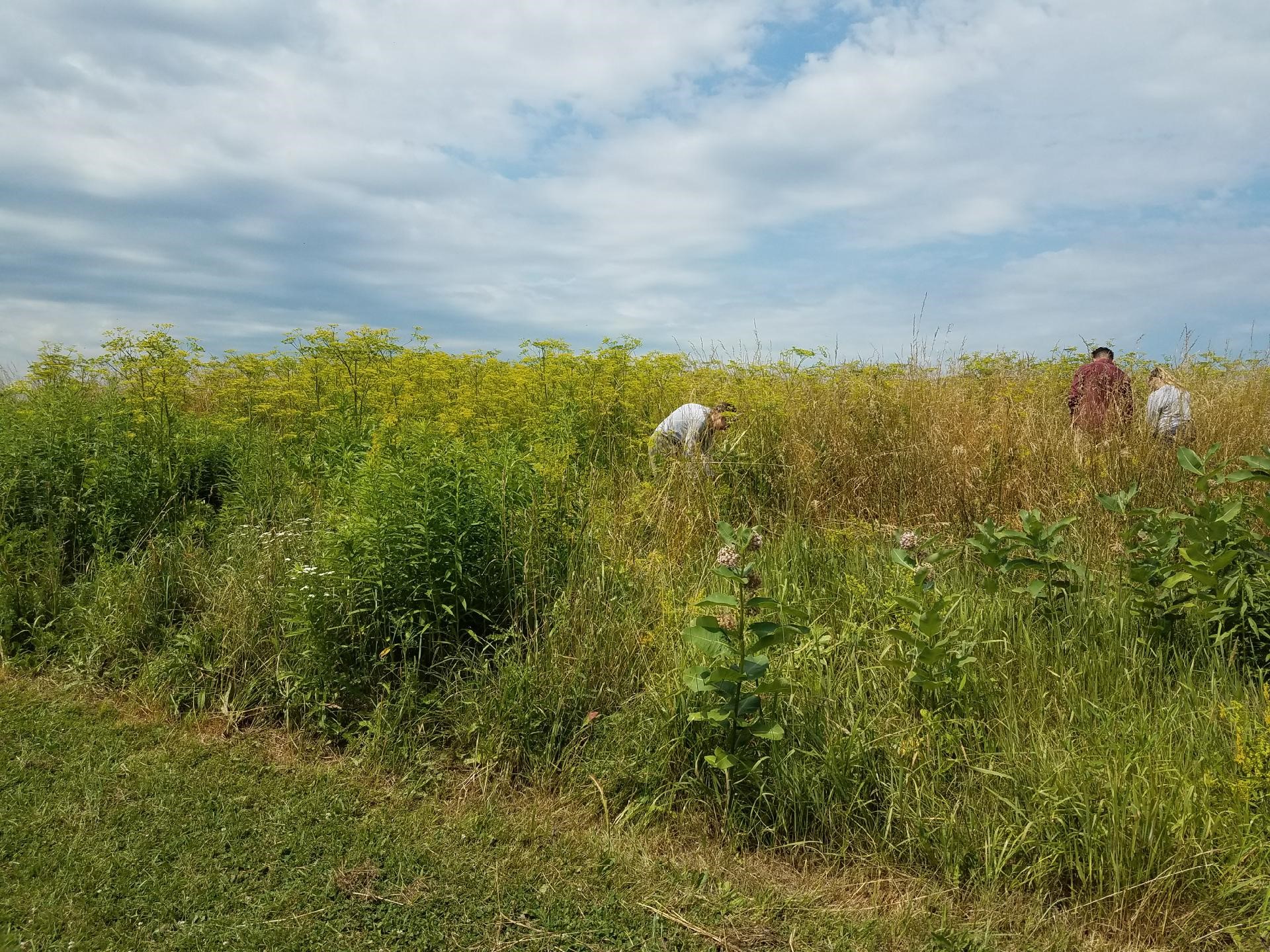
When the members of the ECC arrived, they were informed they would be participating in the Parks’ annual wild parsnip picking day. Each year the staff members from the Environmental Field Office dedicate one day to pick as many wild parsnip plants as they can in hopes of clearing out fields and minimizing the possibility of more growing in the future. Everyone was instructed to wear long sleeve shirts, pants and gloves in order to protect their skin. Starting early in the morning, the group of 10 ECC members joined forces with six State Parks’ staff to venture out into the fields of wild parsnip. Throughout the day everyone hiked through trails and sections of the property, pulling the plants out and piling them up they could be removed from the area. The members were instructed to get as close to the ground as possible to pull the roots up by hand. After walking through 30 acres of fields, the total tally of plants removed came out to be 13,439!
ECC and State Parks crew in one of the many fields. Note the tall yellow plants that are all wild parsnip. Photo by ECC.
After the wild parsnip adventure, there was still more for the ECC members to do at Ganandogan. State Parks has been closely monitoring a field full of invasive plants for the past few years with GPS devices. These devices enable the staff to map the location and the amount of invasive plants within the area. The ECC team helped record data on six different plants while walking across a 70-acre field. To cover the area efficiently, the ECC members were required to stand in a line about 14 paces apart and walk due North across the field in a straight line, using compasses as their guide. Staying straight was not easy while walking over hills and through tall grass, stepping over and through every obstacle in their path.
GPS monitoring device used to mark invasive species in the area. Photo by ECC
The plants they were looking out for were Canada thistle, bull thistle, multiflora rose, autumn olive, swallowwort and non-native honeysuckles. Each observer would stop at every 15 paces to observe the area they were in and mark each location for any of these six invasive plans within a five-foot radius. In total, the team collected over 20,000 points that will be used to create maps in ARC GIS to show the extent of the invasives and to help guide management plans.

















 New York State Parks and Historic Sites Blog