For millions, summer on Long Island means time spent in the sun, the sand and the sea. Iconic Jones Beach State Park drew 9.5 million visitors to its expansive sandy shores in 2024, followed by Robert Moses, boasting 3.9 million visitors. After visitors have slathered on the sunscreen, secured their valuables and anchored their umbrellas, what are they thinking about in terms of beach safety?
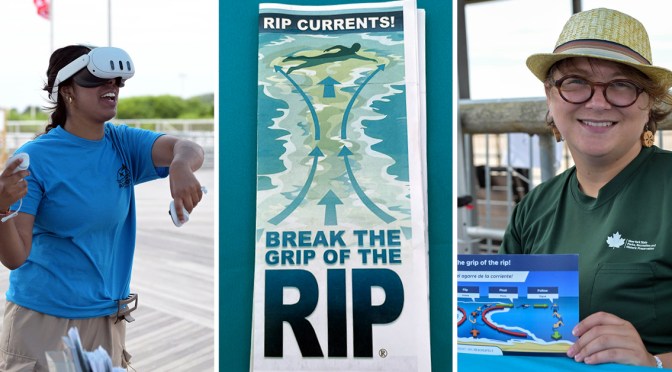
While sharks might immediately come to mind, lifeguards and park staff use equipment, constant communication, and a trained eye to watch for marine life activity and keep beachgoers safe. Knowing that water hazards like rip currents, however, pose more significant risks to swimmers than sharks, our staff set out to spread the word on how to manage these lesser-known acts of nature.
Camping at our 100-plus campgrounds is the ultimate affordable getaway option, but it’s so much more than just a money saver. Camping connects you to nature and allows you to unplug in ways you just can’t replicate on a day trip. While some of our campgrounds are well-known statewide, others are unsung outside their immediate area, their natural beauty and ecological significance waiting to be discovered. As you plan your summer, get up to speed on camping guidance and consider these seven often-overlooked New York State Parks campgrounds for your next great stay.
Many buildings and features built for New York state parks during the 1930s mimicked the natural environment. In the period after World War II, this rustic style started sharing space with more modern designs.
One of the busiest construction periods of the New York State Parks system was during the 1950s and 1960s, when park planners were expecting to welcome record numbers of visitors. You can learn more about that history in our Blazing a Trail timeline project. But, for a deeper dive into the architecture leading up to that era, keep reading…
When you think of golf and New York State Parks, the first thing that probably comes to mind is Bethpage Black. It was well known on Long Island for decades but rose to prominence worldwide when the USGA brought its signature tournament, the U.S. Open, to “the people’s country club” 22 years ago.
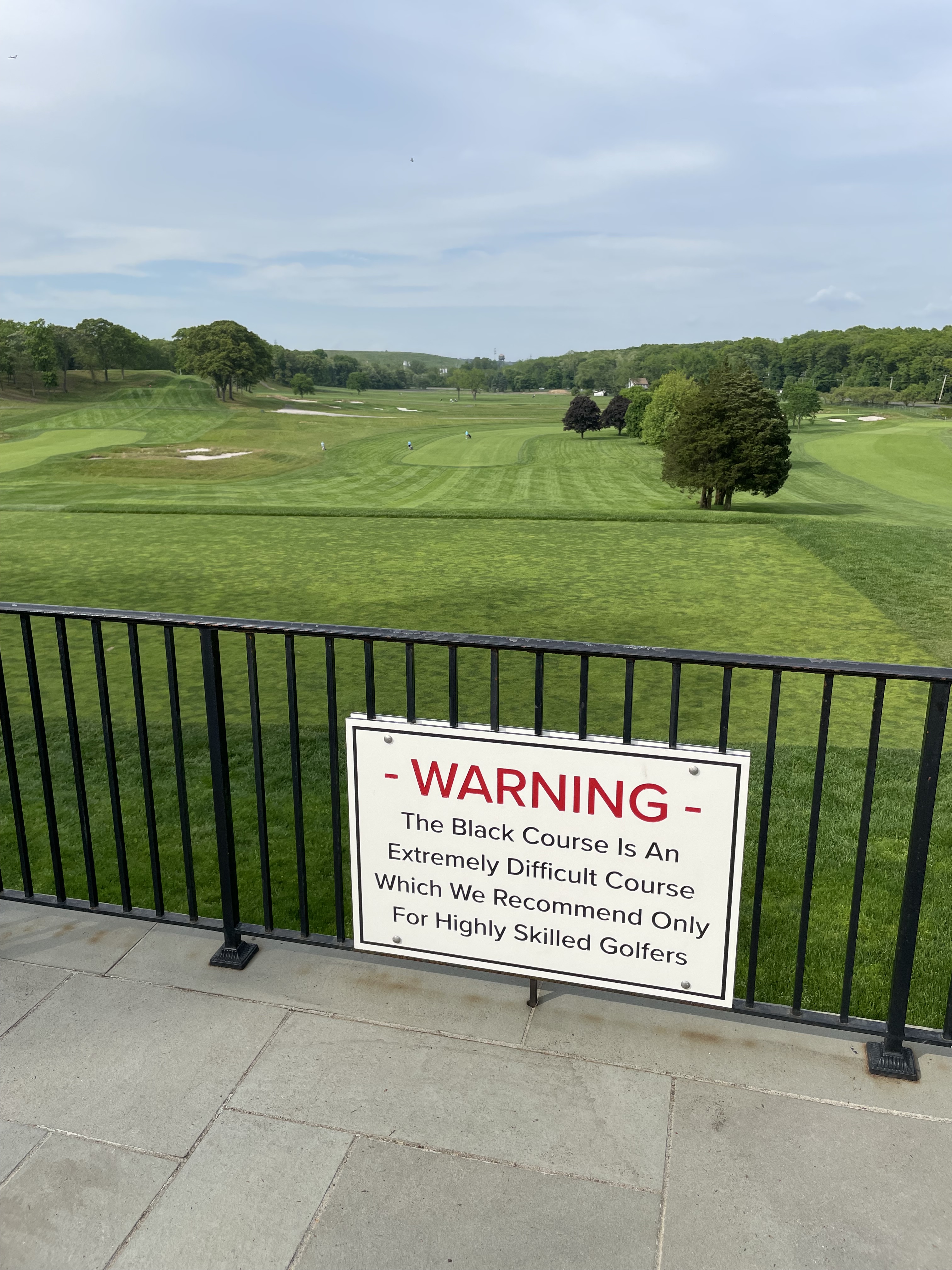
The most photogenicgolf course sign in the United States!
A fellow you may have heard of, Tiger Woods, was victorious that year when he was at the peak of his powers – his eighth Major victory (he currently has 15). He and the U.S. Open came back to Bethpage seven years later for a soggy slugfest that ended on a muddy Monday. It was a journeyman named Lucas Glover who held off Woods and the rest of the elite field, winning his one and only Major title. A decade later, Bethpage Black hosted another Major tournament, the PGA Championship, won by Brooks Koepka. And next year, 2025, it will host an event unlike anything ever experienced there – the 2025 Ryder Cup.
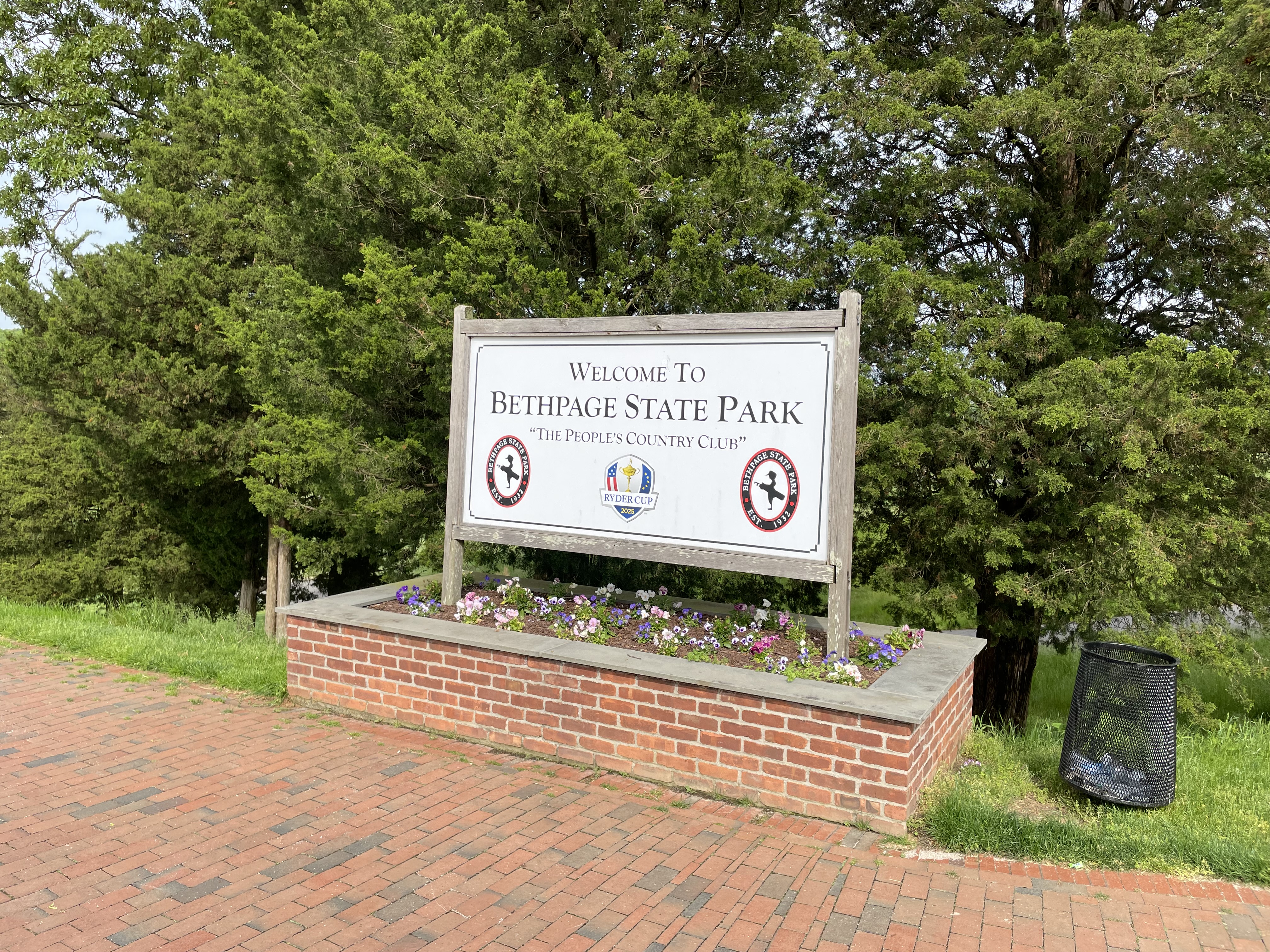
This sign will welcome the world to the Ryder Cup in 2025.
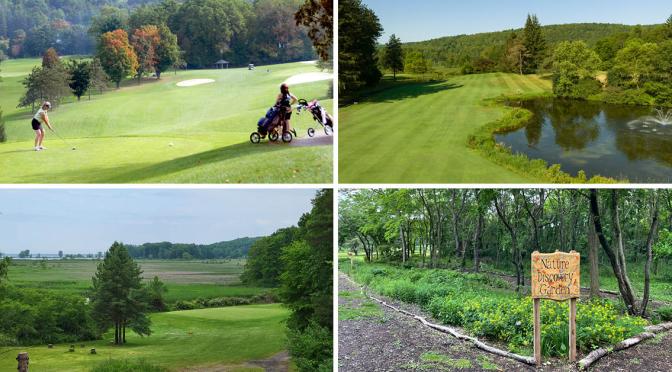
But this post isn’t about that much-anticipated international competition, although they are already preparing. This is about all the great golf opportunities State Parks has around New York.
While there aren’t public events in State Parks this week to mark the 50th anniversary of Earth Day on Wednesday, some of our facilities are still helping the planet every day in the fight against man-made climate change.
Each year, Parks use more than 50 million kilowatt hours (kWh) of electricity to power some 5,000 buildings, including offices, comfort stations, maintenance barns, nature and visitor centers, cabins, historic sites, and other unique facilities like golf courses and pools.
To feed more renewable power into the grid and reduce its demand for fossil fuel-fired electricity, Parks has been installing photovoltaic (PV) solar arrays since 2012. There are now 32 arrays in place, with more expected this year in the Hudson Valley and Long Island regions.
Once the new arrays are completed this year, State Parks will be covering 15 percent of its total statewide energy consumption through solar power, up from the current 4 percent.
These new arrays will offset all the power demand in the Park’s Taconic Region on the eastern side of the Hudson River, which includes 14 parks and eight historic sites in Columbia, Dutchess, Putnam and Westchester counties.
Adding solar power – which unlike natural gas or other fossil fuels does not produce the greenhouse gases that are driving man-made climate change – also saves Parks money on its utility bills. Each year, solar arrays are trimming nearly $340,000 from what Parks would otherwise pay for its electricity!
To perform this work, which both fights climate change and saves money, Parks have trained 100 staff members to design and install our solar arrays.
Parks selects locations for PV arrays that will not disturb natural areas of the park or areas of recreation. They are often installed on rooftops, the back of parking lots, or in other areas that have previously been disturbed.
Parks also applies for financial rebates from the New York State Energy Research and Development Authority (NYERDA) to lower the cost of each project, with savings then reinvested to fund future PV projects. Parks also coordinates with private utility companies to connect its arrays to the grid.
Completed in 2017, Robert Moses State Park made history as being the largest PV installation built by state employees _ its 2,432 American-made panels cover the length of two football fields! This array generates about 950,000 kWh annually, saving more than $100,000 in electricity bills. (For comparison’s sake, the average household in New York State uses about 8,000 kWh annually, according to the U.S. Energy Information Administration).
Solar power made made Robert Moses the first electric energy neutral state park of its size in the country. The array even covers the energy usage of Captree State Park which makes it the second electric energy neutral state park.
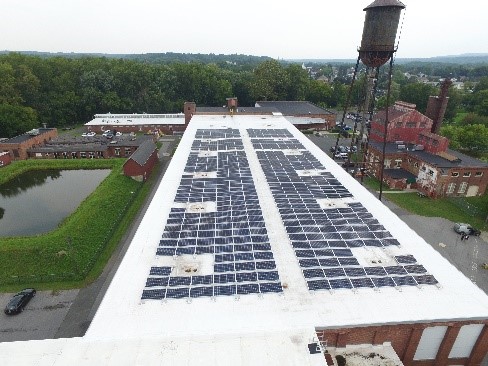
Parks also funded, developed, built and managed the first PV installation on the roof of a building listed on the National Historic Register at Peebles Island State Park, headquarters of the Bureau of Historic Sites and Bureau of Historic Preservation Field Service.
The rooftop array at Peebles Island State Park.
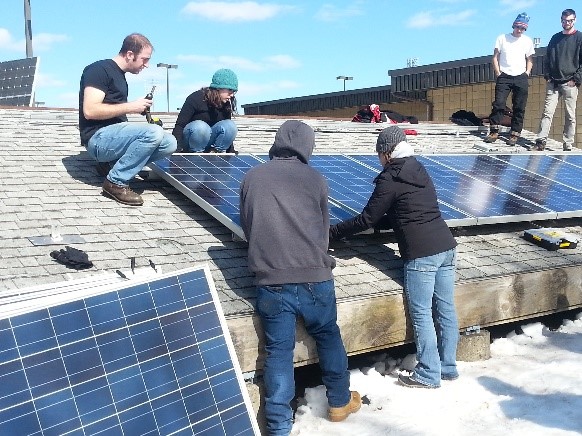
The 450 panels installed on the roof of Peebles’ historic Bleachery Building are projected to generate more than 188,000 kWh and save about $22,500 in utility bills annually. The array covers approximately 30 percent of the building’s energy use. The array at Peebles Island is also used a training location for students from Hudson Valley Community College and the Glenmont Job Corps.
Students from Hudson Valley Community College receive training at the solar array at Peebles Island State Park.
And there will be much more to come. State Parks intends to aggressively increase its solar footprint in order to cover half of its statewide electrical consumption by 2025.
From our smallest arrays to our largest arrays, each PV installation is working to create a greener state parks system every day and for many Earth Days to come!
Cover Photo- Robert Moses State Park solar array. All photos by NYS Parks.
By Caity Tremblay, Parks Energy and Sustainability Bureau





 New York State Parks and Historic Sites Blog